
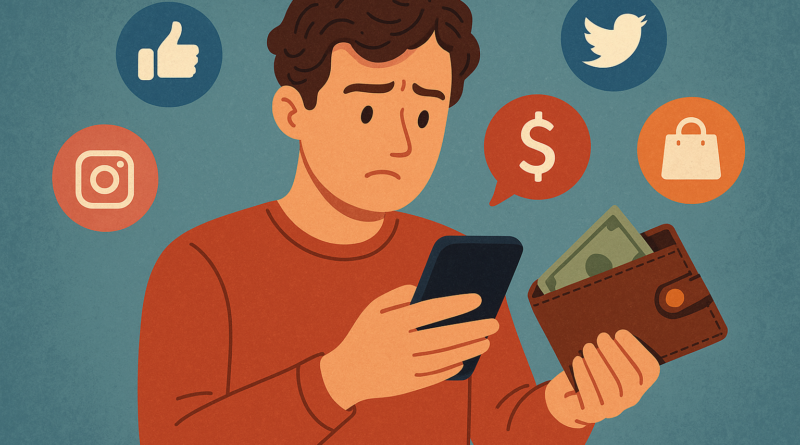
How Social Media Is Quietly Draining Your Wallet
Most people recognize that social media consumes time. What’s less obvious is how effectively it influences spending. Behind short videos and curated posts is a system designed to shape behavior, often nudging users toward purchases without them fully realizing it.
Social media has become one of the most powerful drivers of consumer behavior. Understanding its financial impact is not about avoiding it entirely, but about recognizing how these platforms are structured to influence decisions.
The Spending Mechanisms Behind Social Media
A key factor is the constant exposure to curated lifestyles. Influencers often present luxury products, travel, and experiences that create a distorted baseline for what feels normal. Many of these displays rely on borrowed items, sponsorships, or staged environments, but they still shape perception.
This dynamic amplifies social comparison. Instead of comparing ourselves to a small circle of peers, we now measure against millions of carefully edited highlight reels. Research shows that comparison strongly affects satisfaction and financial choices, often leading to spending intended to close perceived gaps.
At the same time, platforms reduce the friction between desire and purchase. One-tap checkout, personalized product links, and limited-time offers compress the time between seeing something and buying it. Combined with highly targeted advertising based on behavioral data, these systems create a streamlined path from attention to transaction.
Navigating a High-Influence Environment
Social media is unlikely to become less persuasive. However, users can reduce its financial impact by recognizing common patterns. Curating feeds to minimize comparison-driven content, introducing delays before purchases, and separating entertainment from shopping activities can significantly reduce impulse spending.
Ultimately, awareness changes the relationship. When users recognize that many platform features are designed to convert attention into revenue, they can engage more intentionally rather than reactively.