Everyday Artifacts
Ordinary objects reveal how modern life is routed through interfaces, permissions, and procedural checkpoints. These artifacts capture the points where direct experience becomes mediated or deferred.
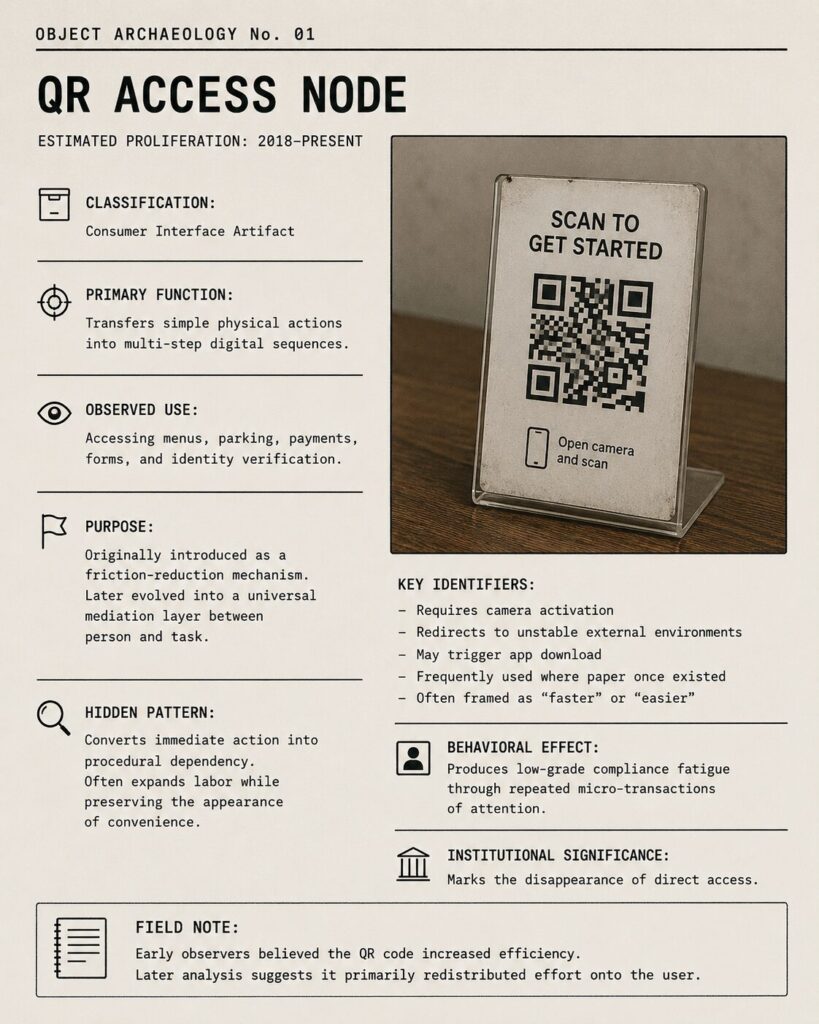
01 – QR Access Node
Main idea: Access now often begins with mediation. Before entry, action, or service, the user must scan, verify, and translate themselves into system-readable form. The object marks the replacement of direct access with procedural access.
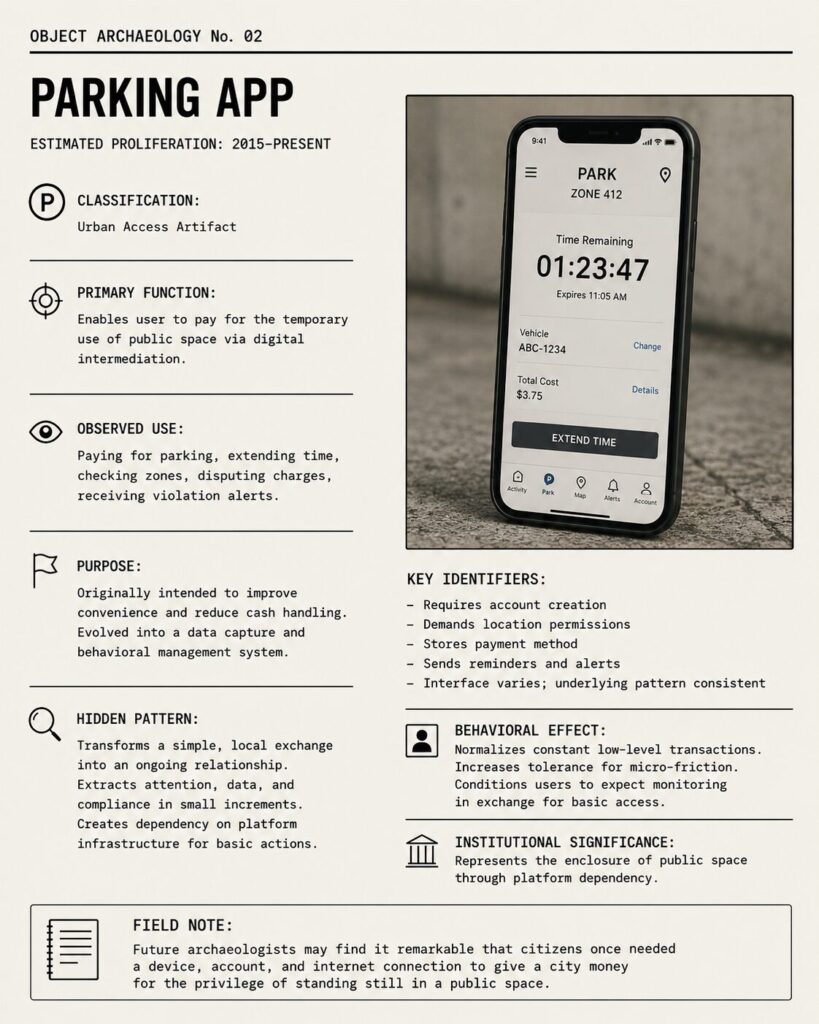
02 – Parking App
Main idea: A simple physical action becomes dependent on digital layers. Parking no longer means parking. It means authentication, app logic, payment routing, and system compliance.
03 – Two-Factor Authorization
Main idea: Security expands through recursive verification. Each layer adds protection, but also increases friction, dependency, and procedural distance from the original task.
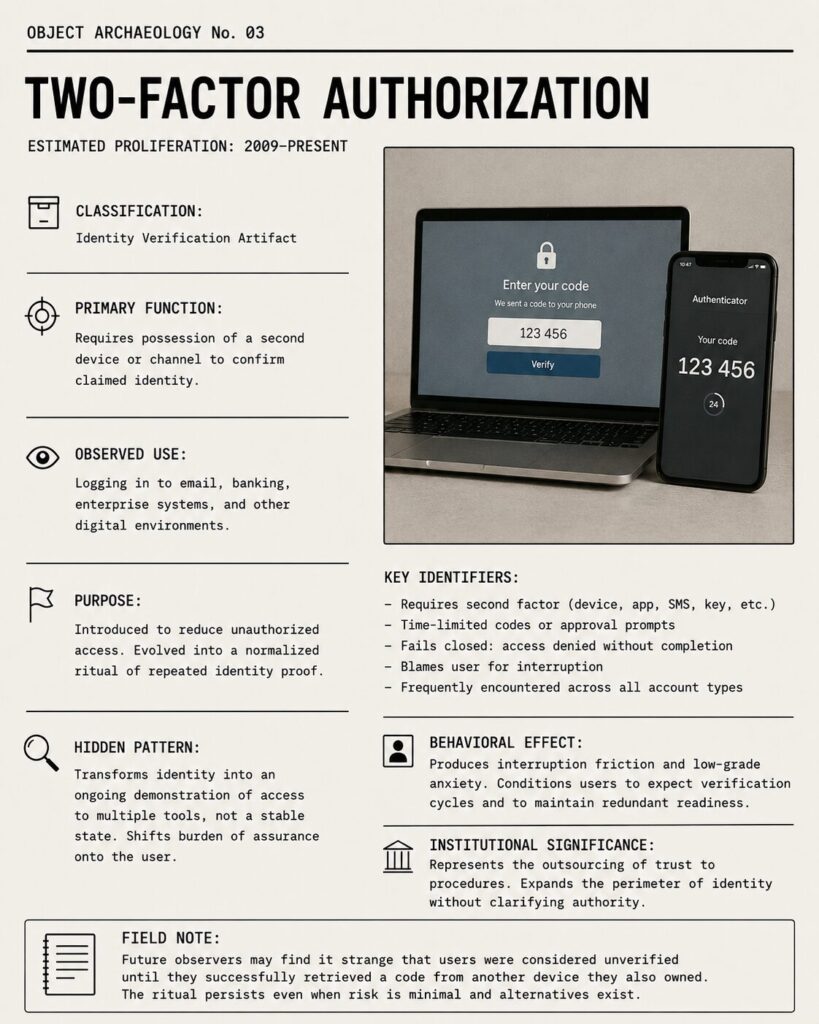
04 – CAPTCHA
Main idea: Proof of humanity has become a routine labor. The user must repeatedly verify they are human inside systems increasingly built for machines.
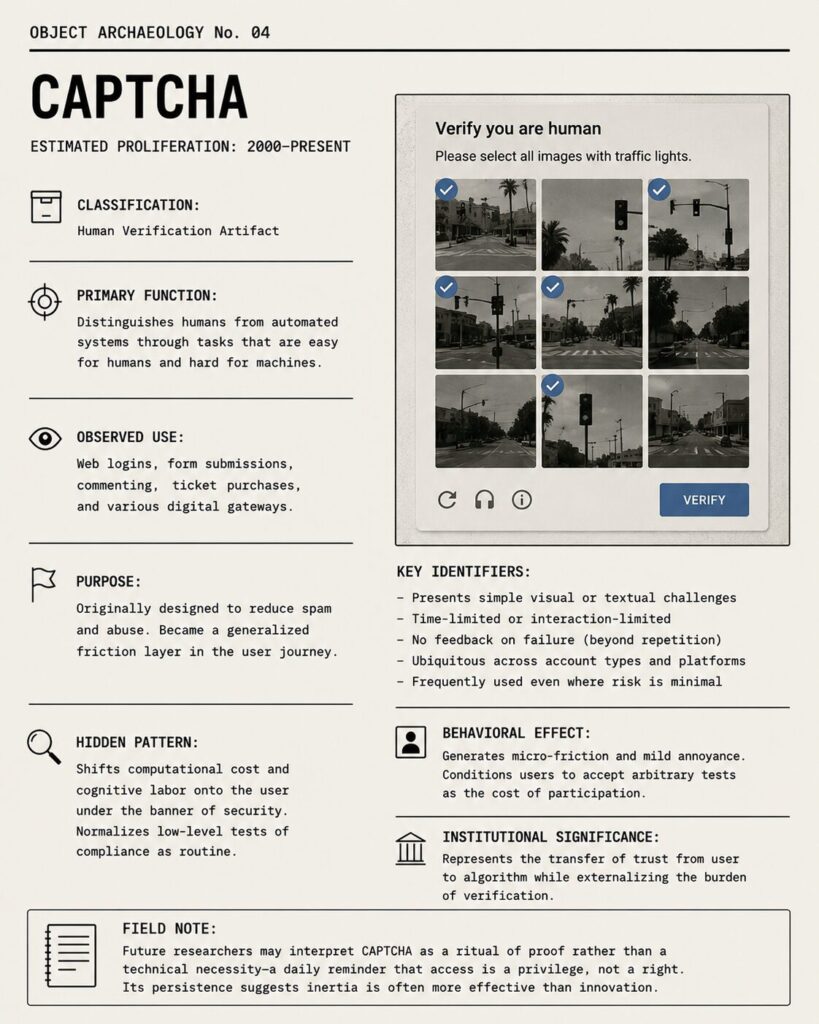
05 – Forced Update Reset
Main idea: Device continuity is interrupted by system-level optimization cycles. The user’s workflow is subordinate to infrastructural maintenance and invisible technical priorities.
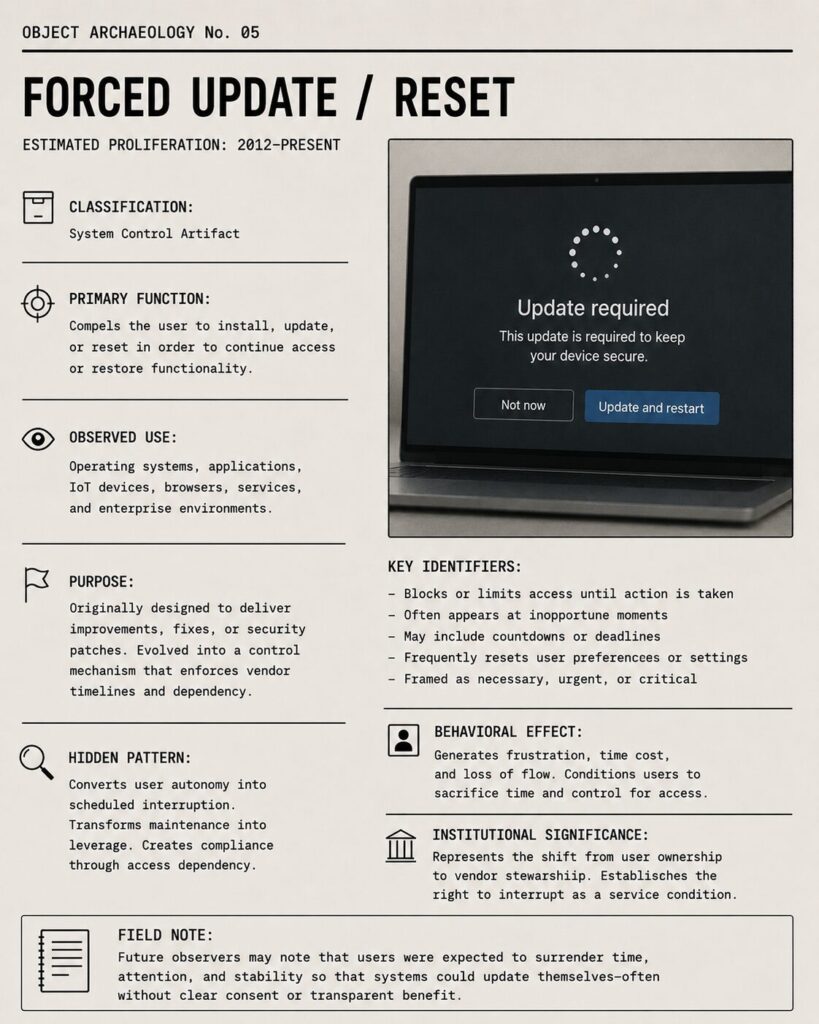
06 – Cookie Consent Banner
Main idea: Legal compliance appears as ritualized interaction. The banner functions as procedural theater, converting complex data relationships into repetitive symbolic acknowledgment.
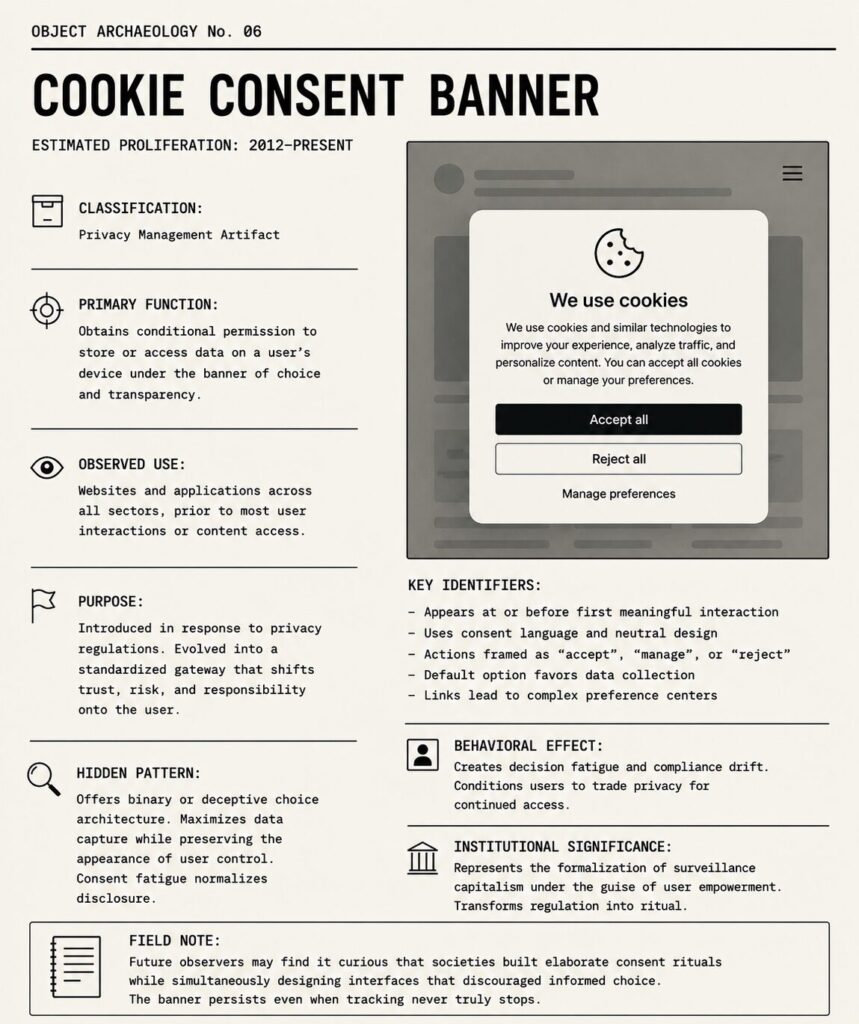
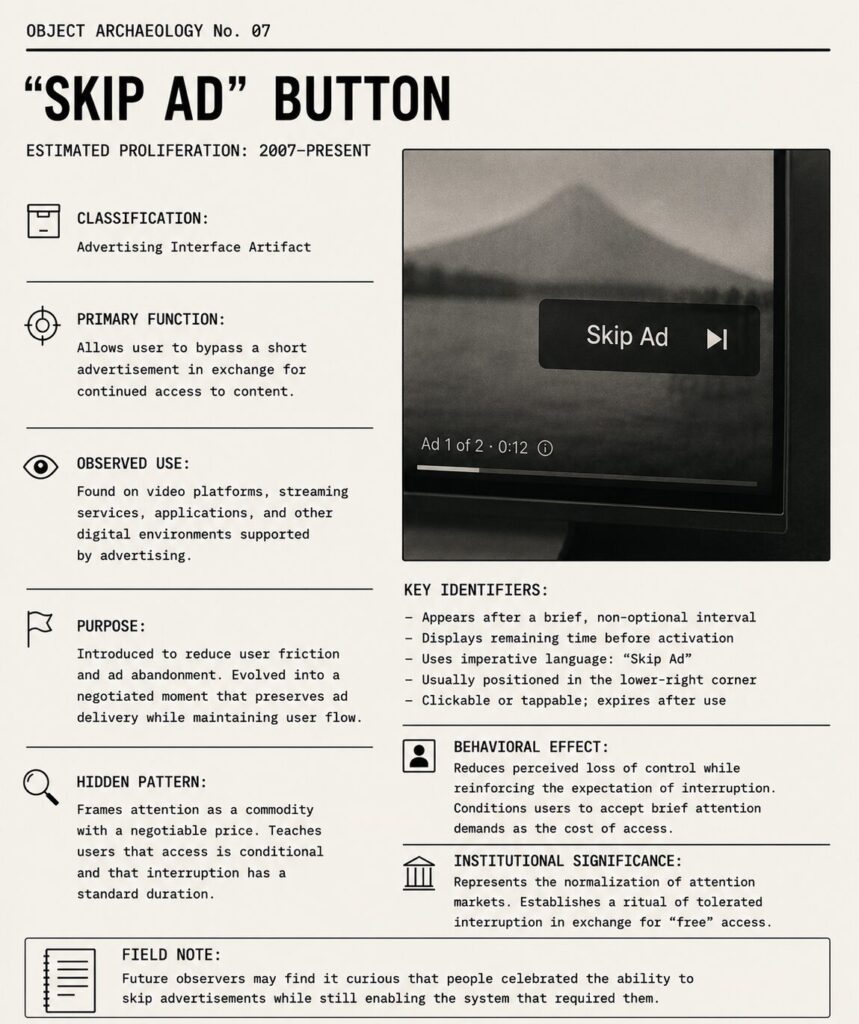
07 – Skip Ad Button
Main idea: Attention has become a managed commodity. Even the option to skip interruption is itself part of the optimized architecture of engagement.