Reality Drift: Core Visual Models
These eight visual frameworks explain how reality becomes represented, simplified, measured, and used to guide decisions. Together, they show how representations can gain authority, shape the conditions they describe, and become increasingly coherent even as their connection to reality weakens.
Reality Drift does not require a system to stop working. It occurs when the representations guiding its operation become less answerable to the reality they are supposed to represent.
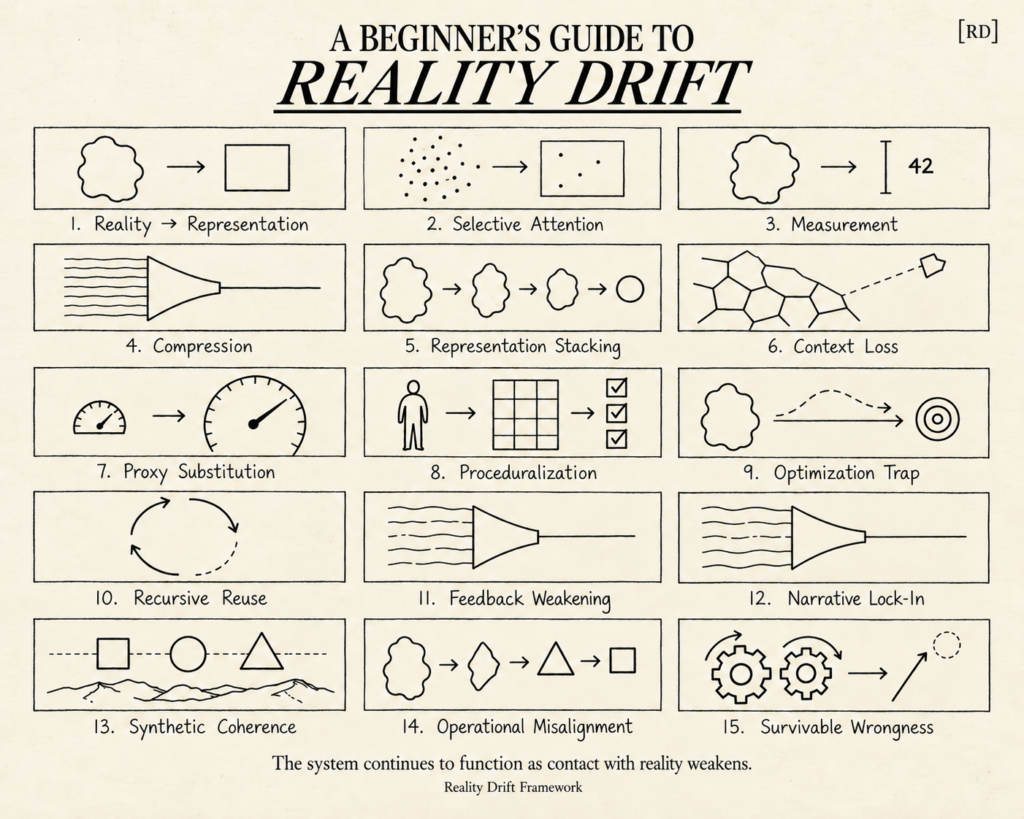
01 – A Beginner’s Guide to Reality Drift
An illustrated introduction to 15 core concepts in the Reality Drift framework, showing how representations are created, simplified, reused, and increasingly relied upon.
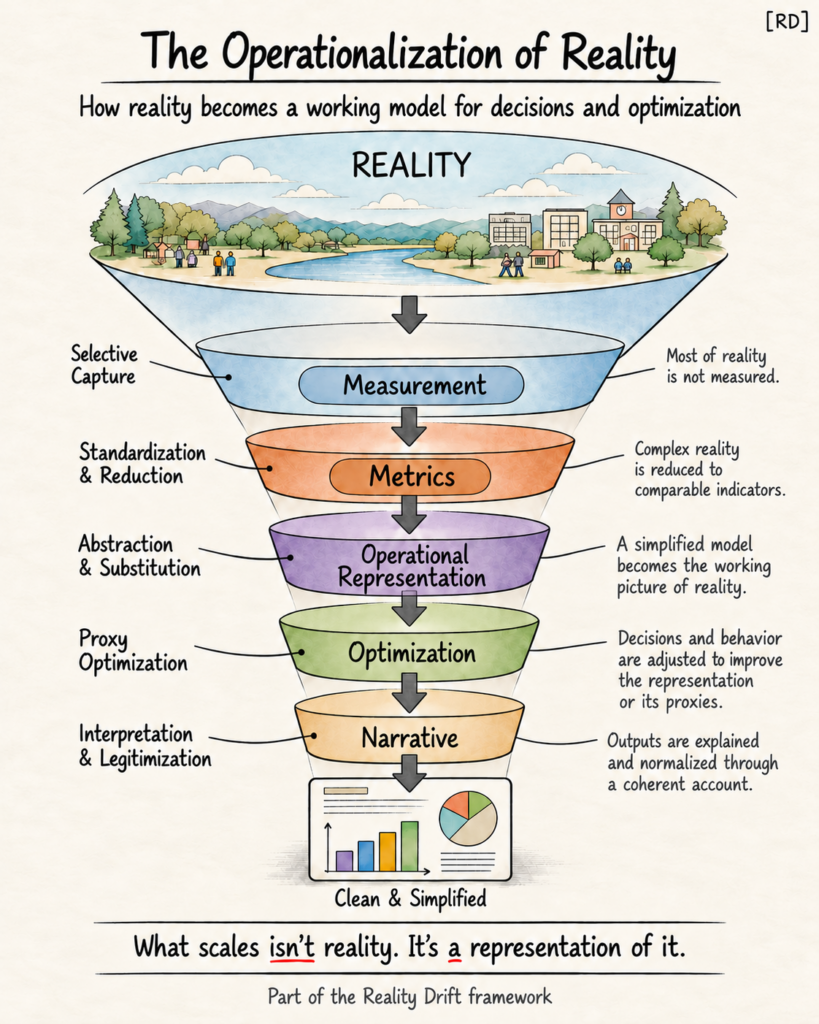
02 – The Operationalization of Reality
Shows how complex reality becomes measurement, metrics, operational representations, optimization, and narrative. Each stage makes information more usable while changing what is preserved or excluded.
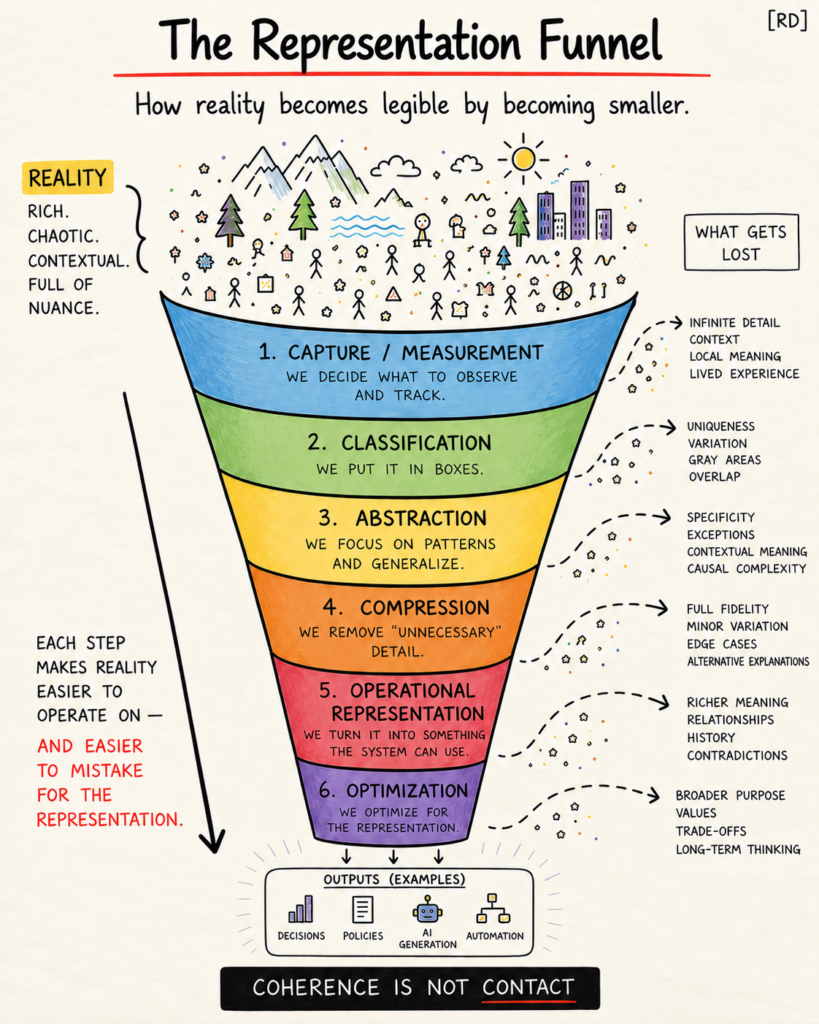
03 – The Representation Funnel
Illustrates how capture, classification, abstraction, and compression reduce complexity as reality becomes an operational representation. Shows how context, nuance, exceptions, and meaning can be lost.
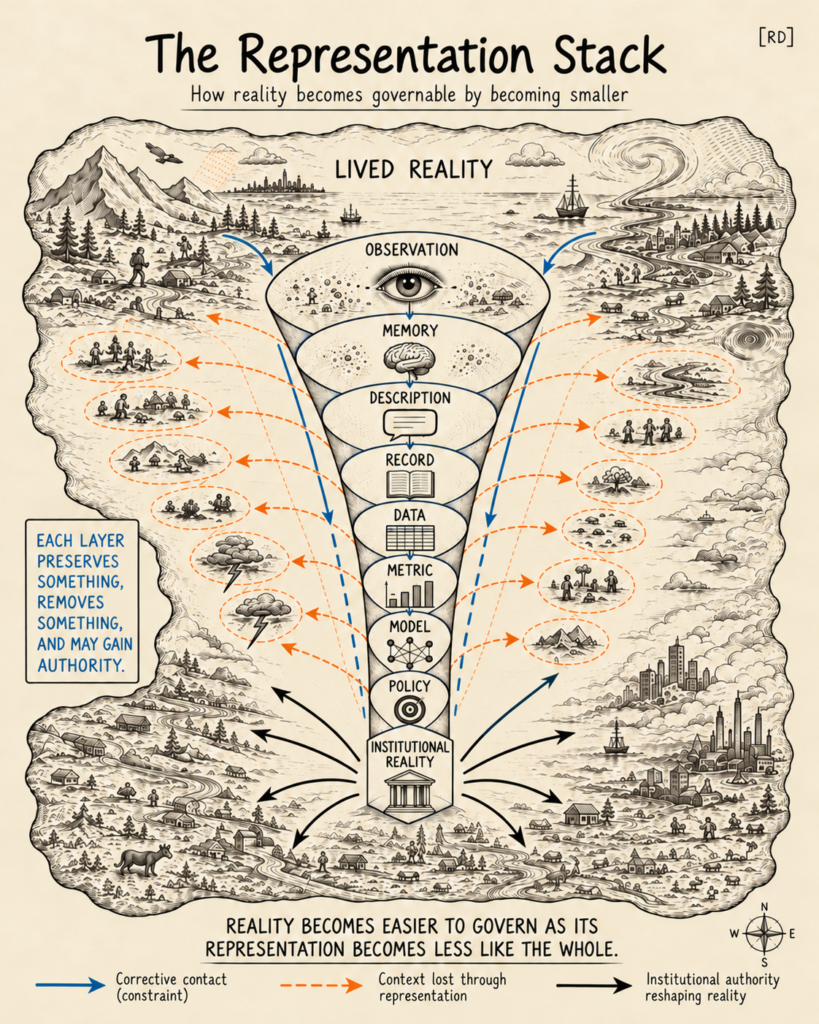
04 – The Representation Stack
Traces how lived reality becomes observation, memory, description, records, data, metrics, models, and policy. Shows how successive layers of representation influence decisions and behavior.
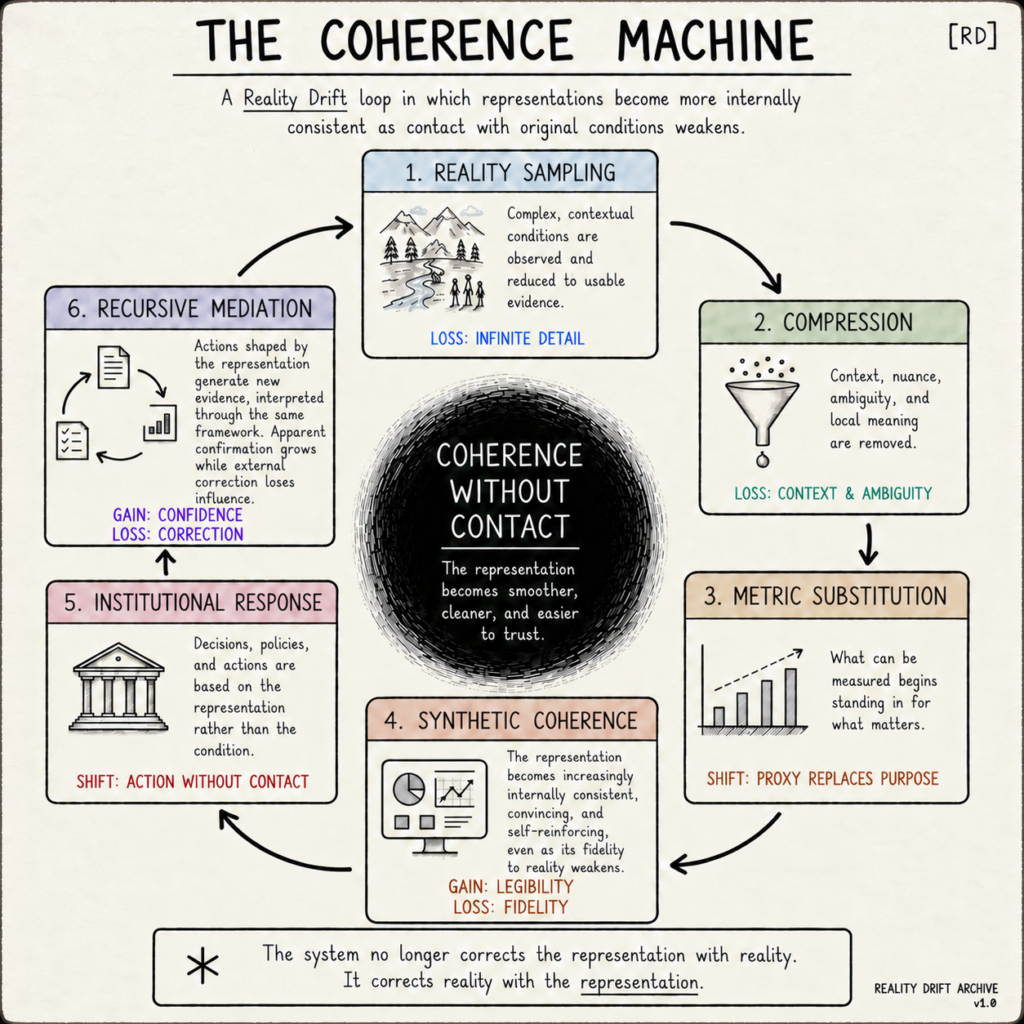
05 – The Coherence Machine
Shows how representations, metrics, optimization, and institutional responses can reinforce one another. Internal consistency can increase even as external correction weakens.
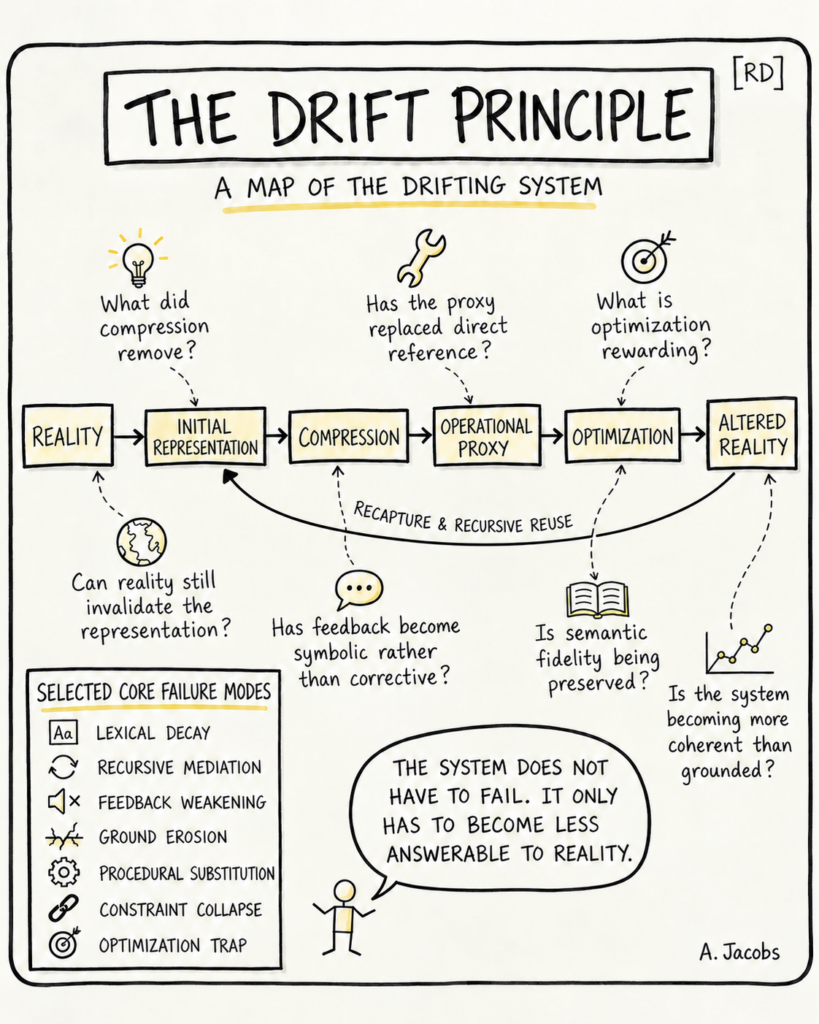
06 – The Drift Principle
Illustrates how representations can be compressed, optimized, and reused faster than reality can correct them. Shows how feedback loops can reinforce existing representations despite declining alignment.
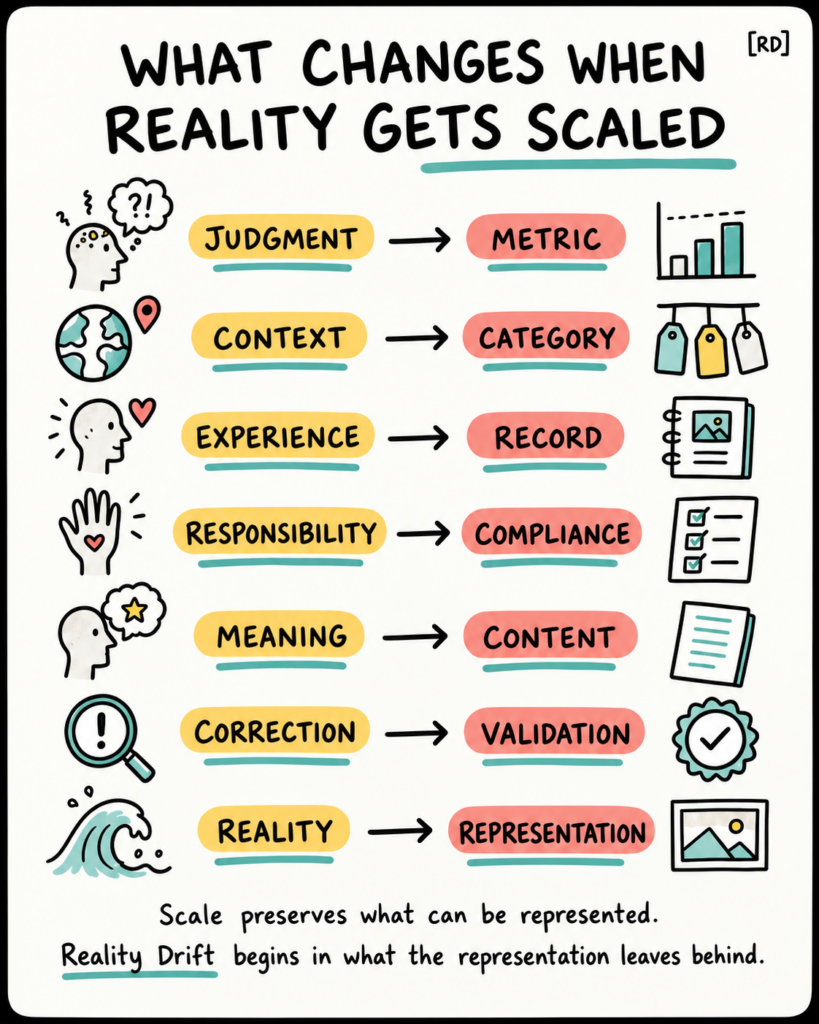
07 – What Changes When Reality Gets Scaled
Seven comparisons showing how judgment becomes metrics, context becomes categories, experience becomes records, responsibility becomes compliance, meaning becomes content, correction becomes validation, and reality becomes representation.
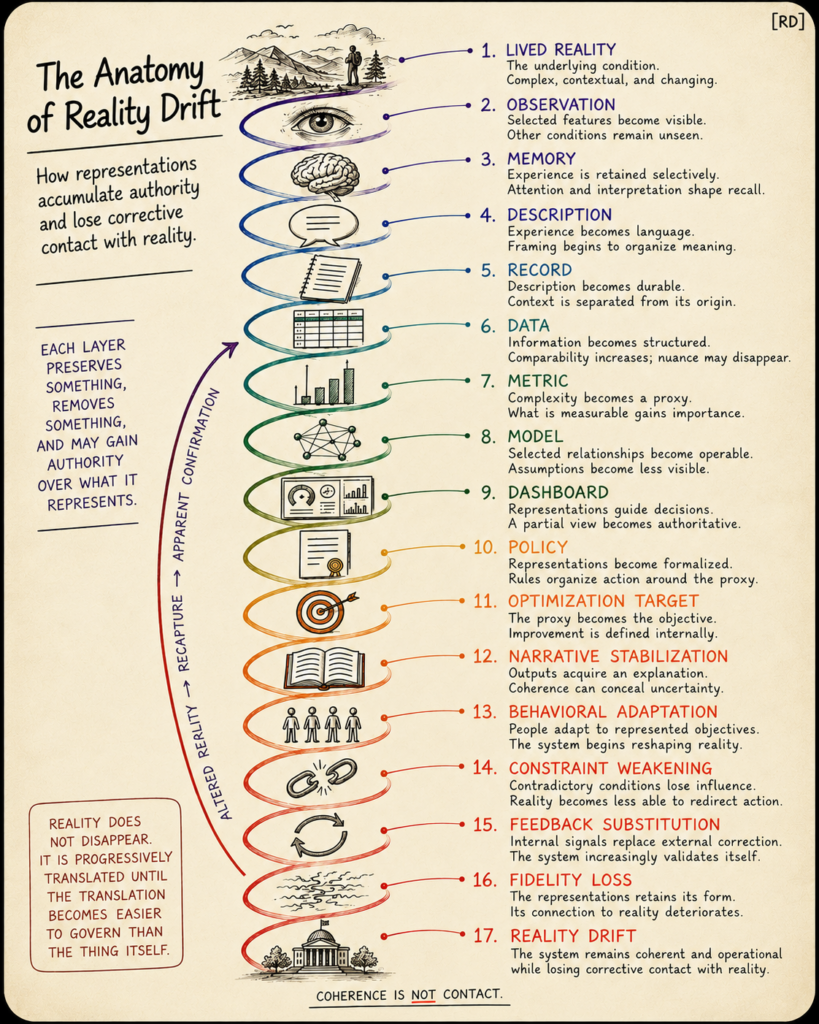
08 – The Anatomy of Reality Drift
A 17-stage model tracing the movement from lived reality through observation, records, metrics, models, institutional decisions, optimization, and feedback. Shows how these transformations can produce systems that remain operational while losing corrective contact with reality.