
Cognition, Compression & Cognitive Drift
How thought becomes structured, extended, compressed, and potentially separated from the conditions that ground it.
These visual frameworks examine how human cognition organizes experience, how thought interacts with memory and external systems, and how it can remain coherent while losing contact with reality. Coherence is not contact. What matters is not only whether thought holds together, but whether reality can still correct it.
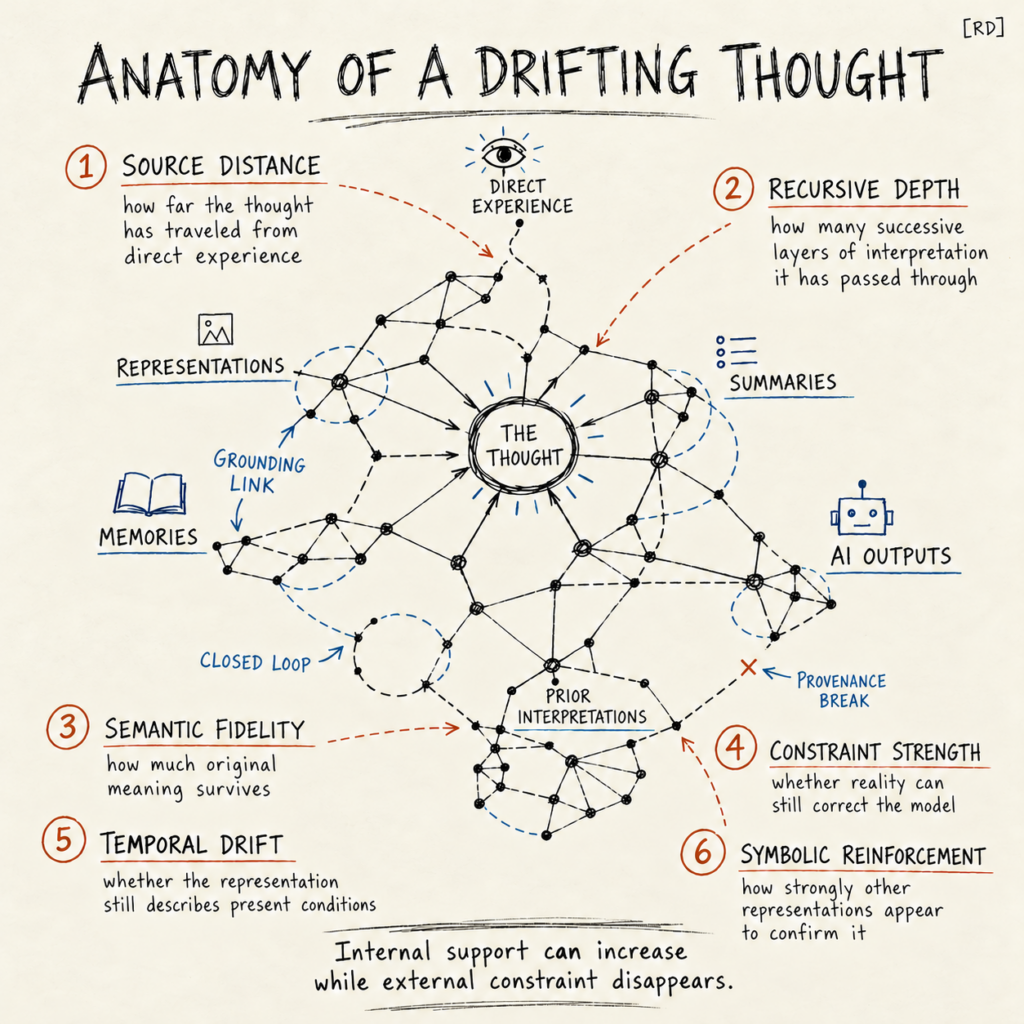
01 — Anatomy of a Drifting Thought
A thought can accumulate support from memories, representations, summaries, and prior interpretations while becoming increasingly distant from direct experience.
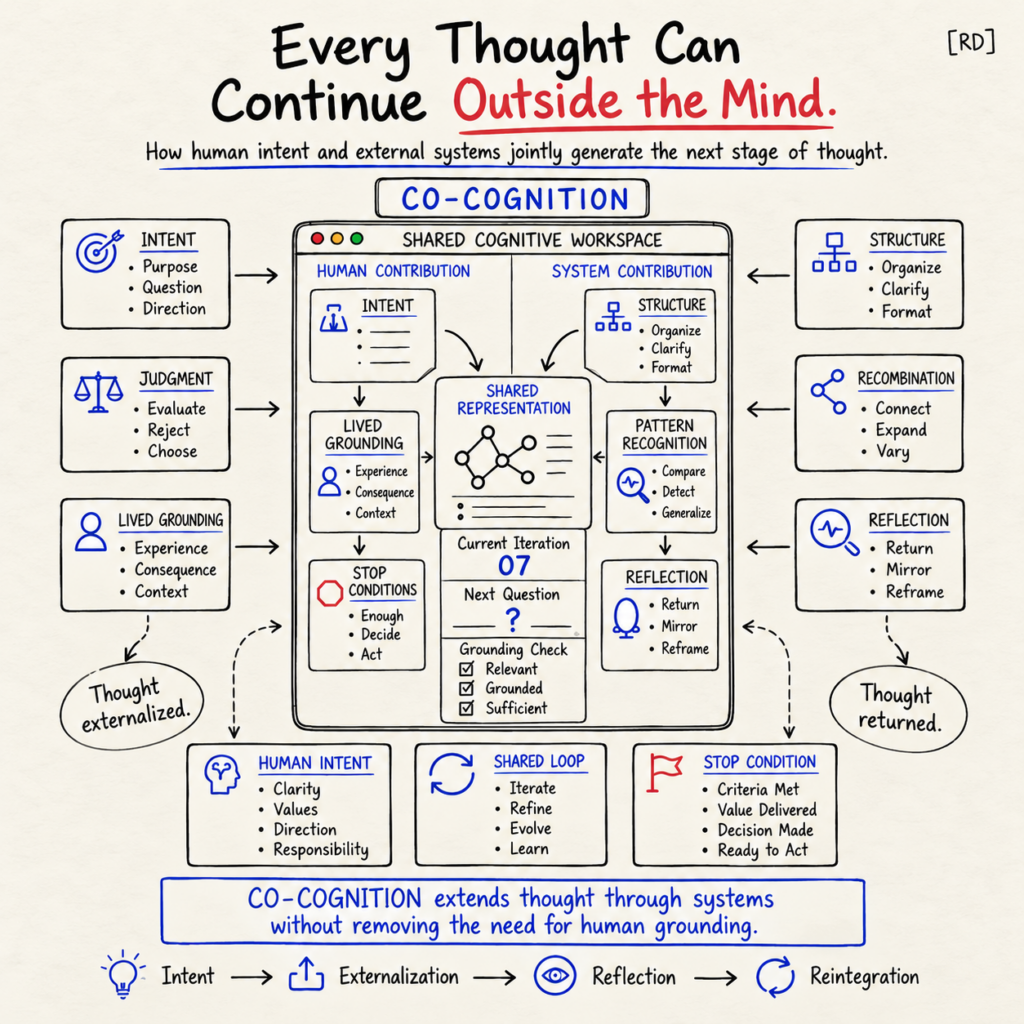
02 — Every Thought Can Continue Outside the Mind
Human thought can be externalized into prompts, documents, diagrams, interfaces, and AI systems, where it can be reorganized and returned for further judgment.
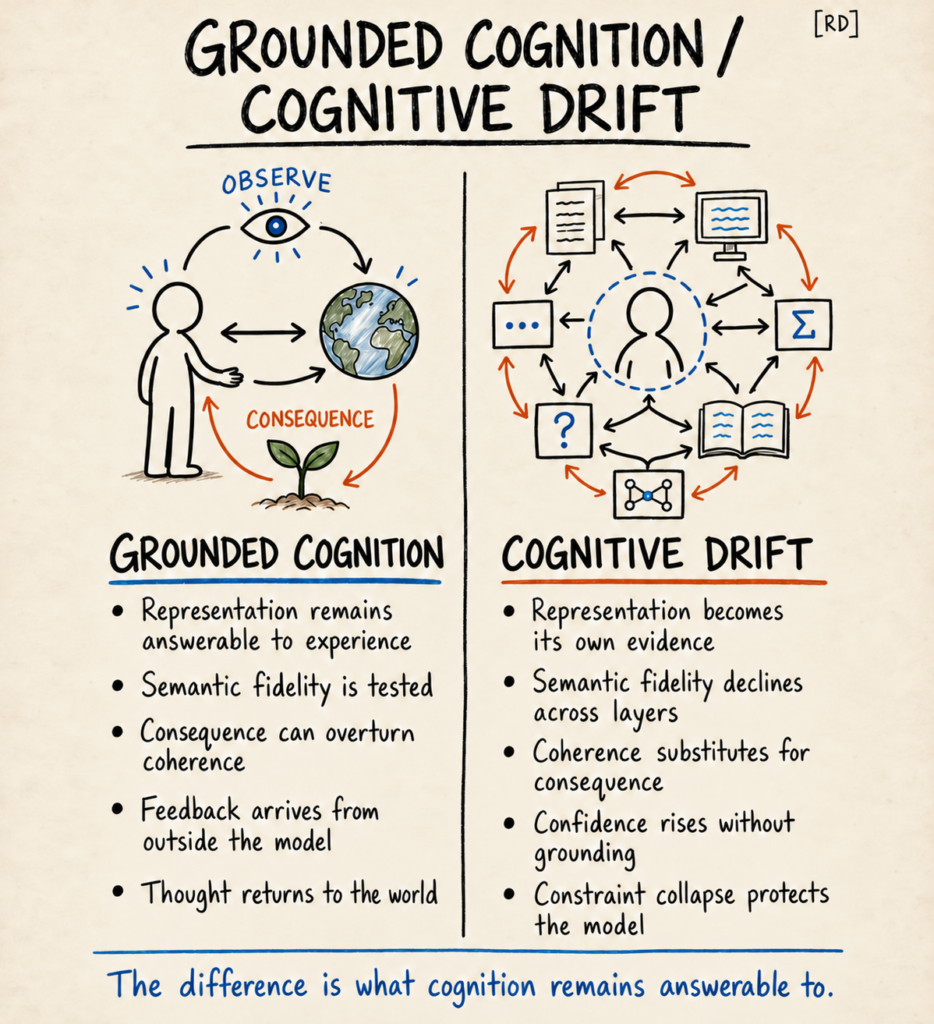
03 — Grounded Cognition / Cognitive Drift
Grounded cognition remains answerable to experience, consequence, and correction. Cognitive drift emerges when representations increasingly validate one another instead of being tested against external conditions.
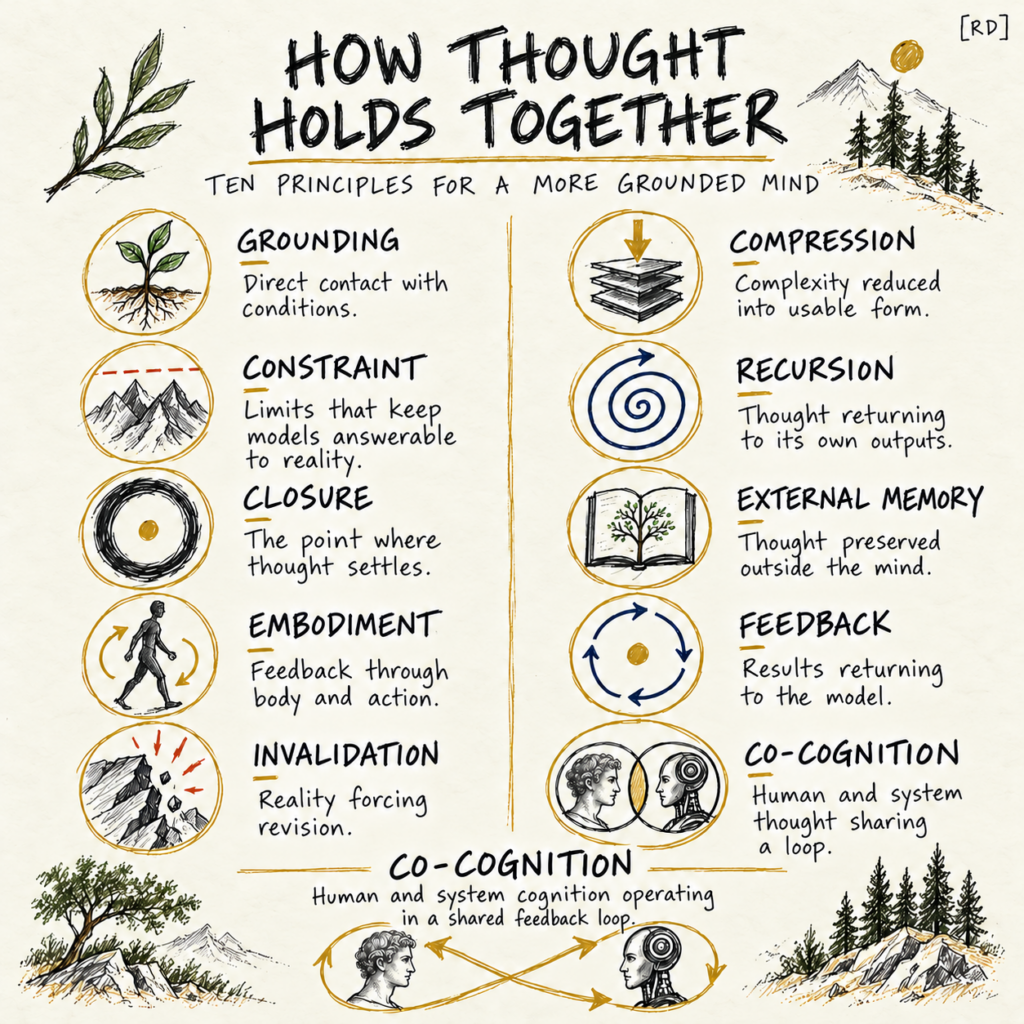
04 — How Thought Holds Together
Ten principles describe the mechanisms that allow cognition to organize complexity while remaining connected to reality: grounding, constraint, closure, embodiment, invalidation, compression, recursion, external memory, feedback, and co-cognition.
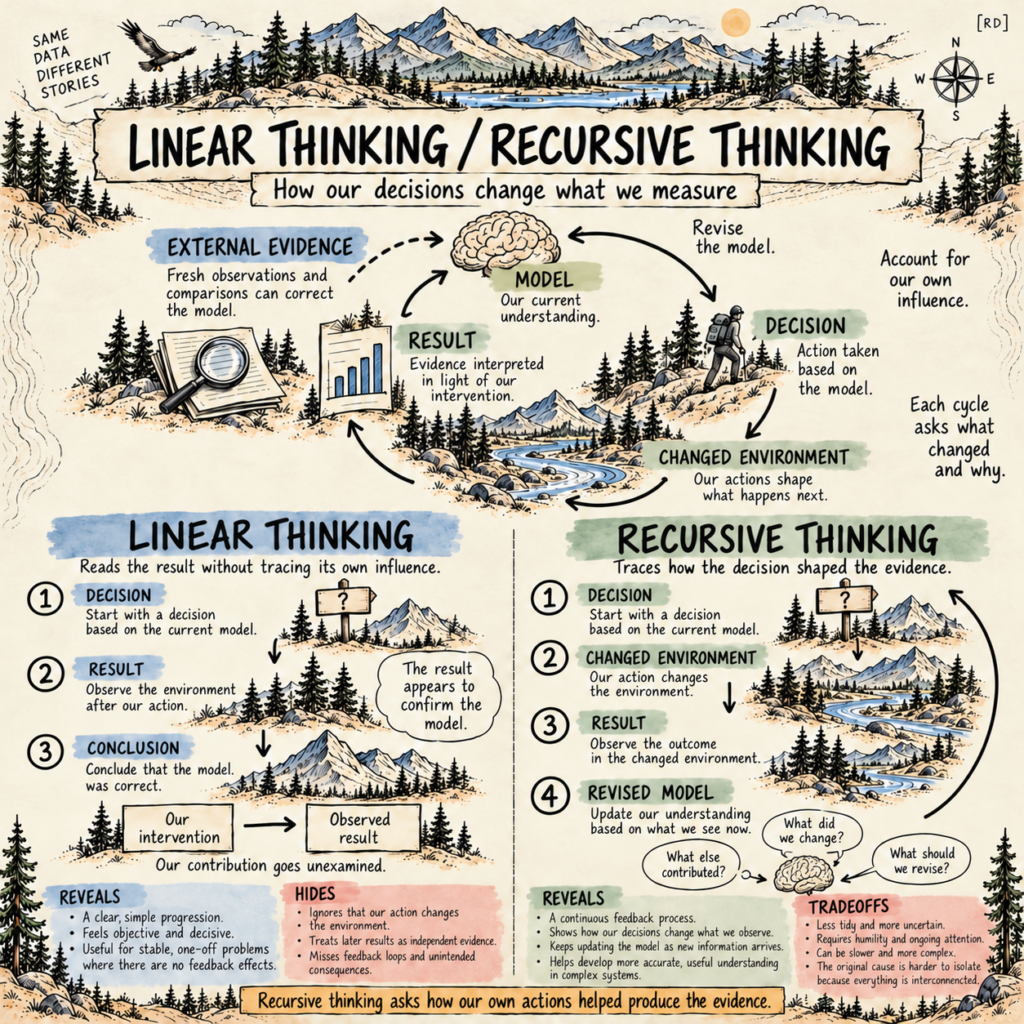
05 — Linear Thinking / Recursive Thinking
Linear thinking interprets outcomes without fully accounting for how earlier decisions shaped them. Recursive thinking recognizes that actions change the environment and therefore influence the evidence used to evaluate the original model.
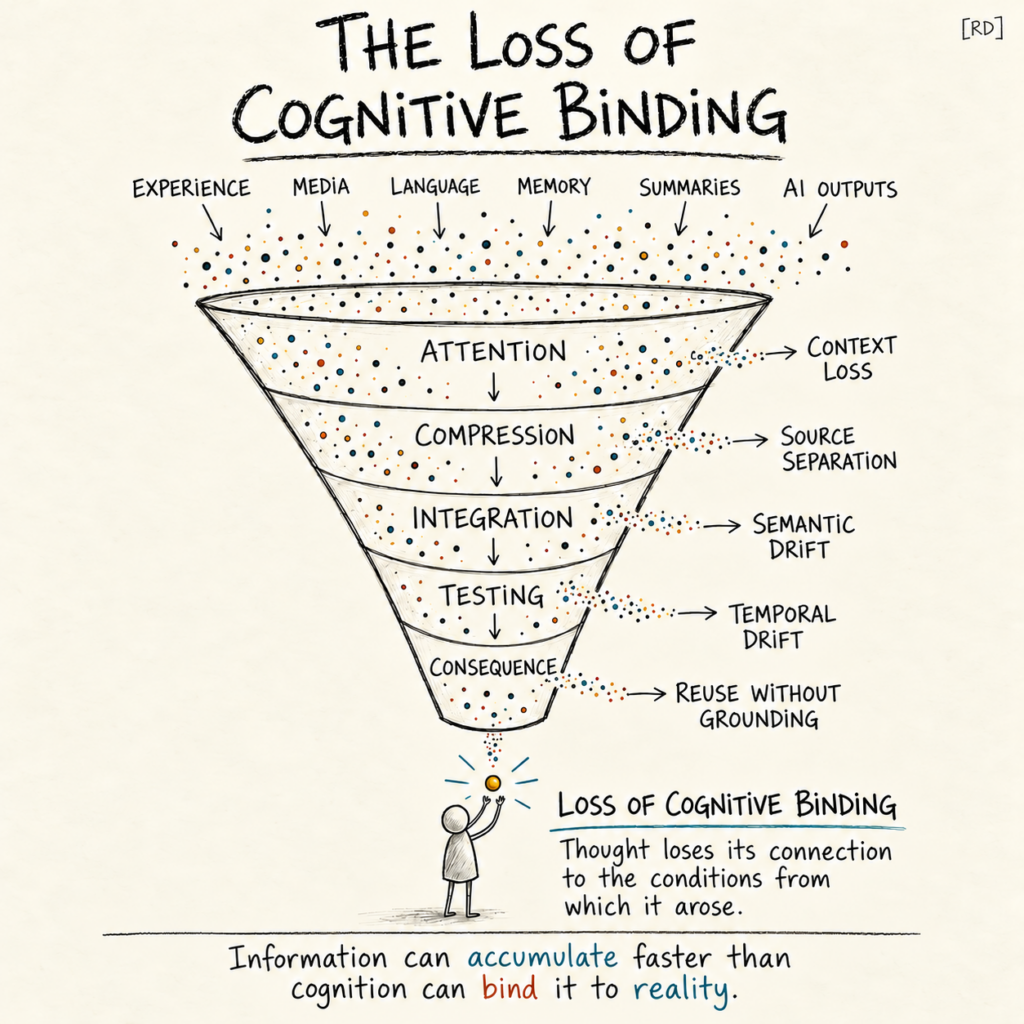
06 — The Loss of Cognitive Binding
Information enters cognition through experience, media, language, memory, summaries, and AI outputs. As information is filtered, compressed, and integrated, its connection to source, context, time, and consequence can weaken.
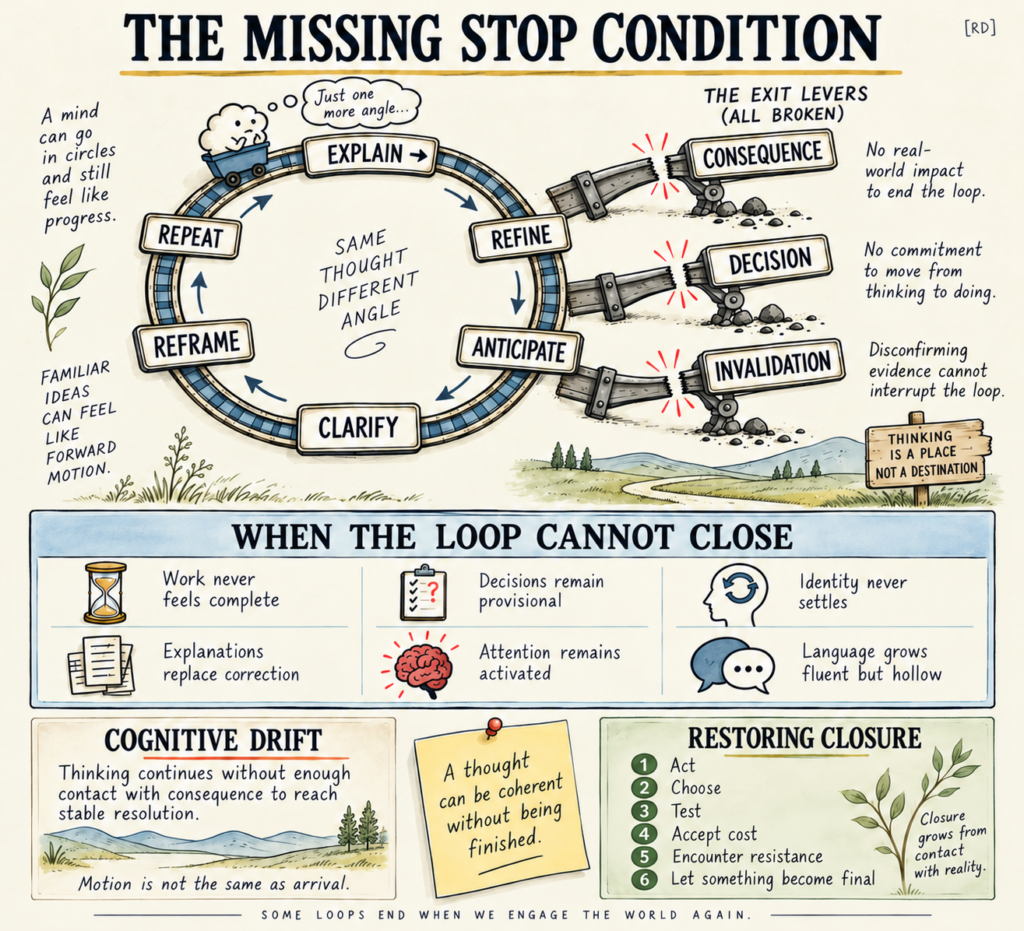
07 — The Missing Stop Condition
Thinking can continue through explanation, refinement, anticipation, and reframing without reaching a decision or confronting consequence. When effective stopping conditions disappear, cognitive activity can substitute for meaningful resolution.
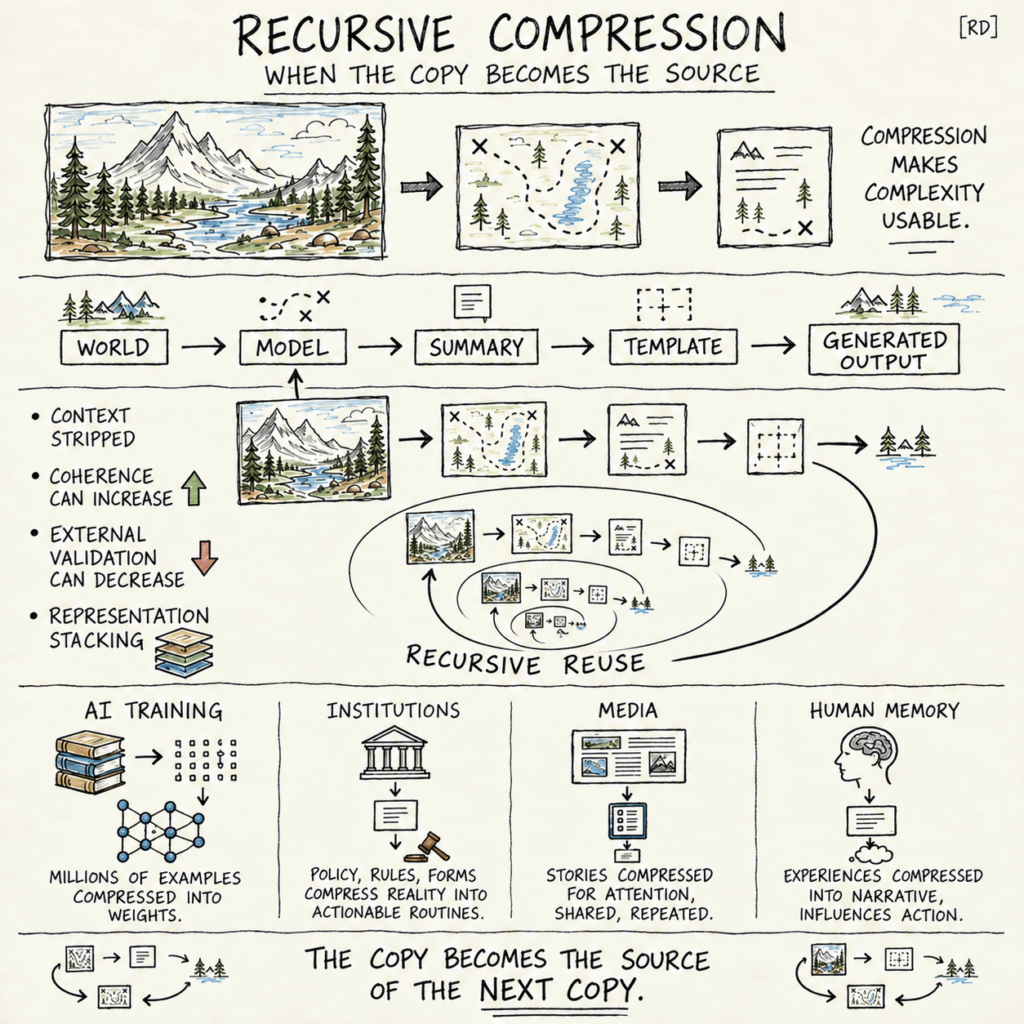
08 — Recursive Compression: When the Copy Becomes the Source
Representations become increasingly compressed as models generate summaries, summaries become templates, and templates produce new outputs. When these outputs become the source material for further compression, coherence can increase while contact with the original conditions diminishes.
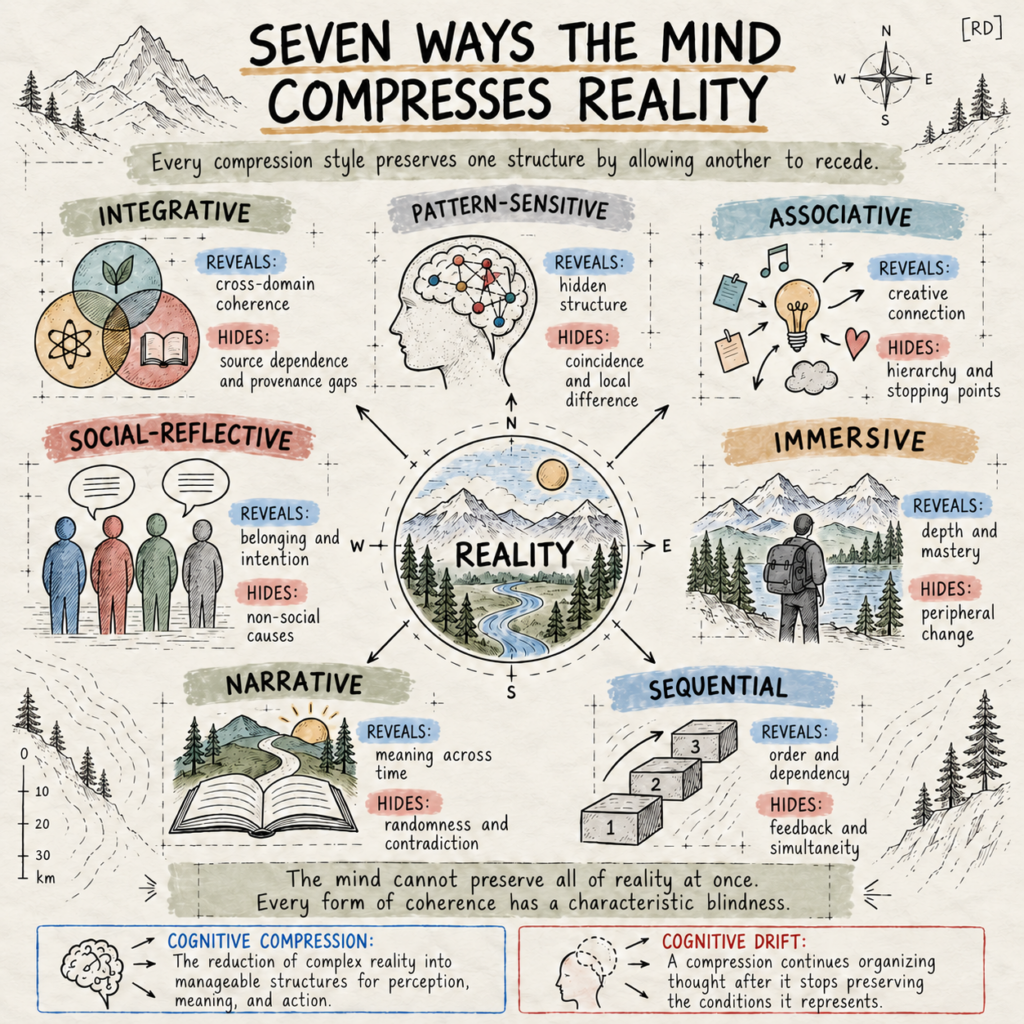
09 — Seven Ways the Mind Compresses Reality
Cognition reduces complexity through different organizing styles. Integrative, pattern-sensitive, associative, social-reflective, immersive, narrative, and sequential thinking each reveal particular structures while obscuring others.