Reality Drift — Definitions & Core Concepts
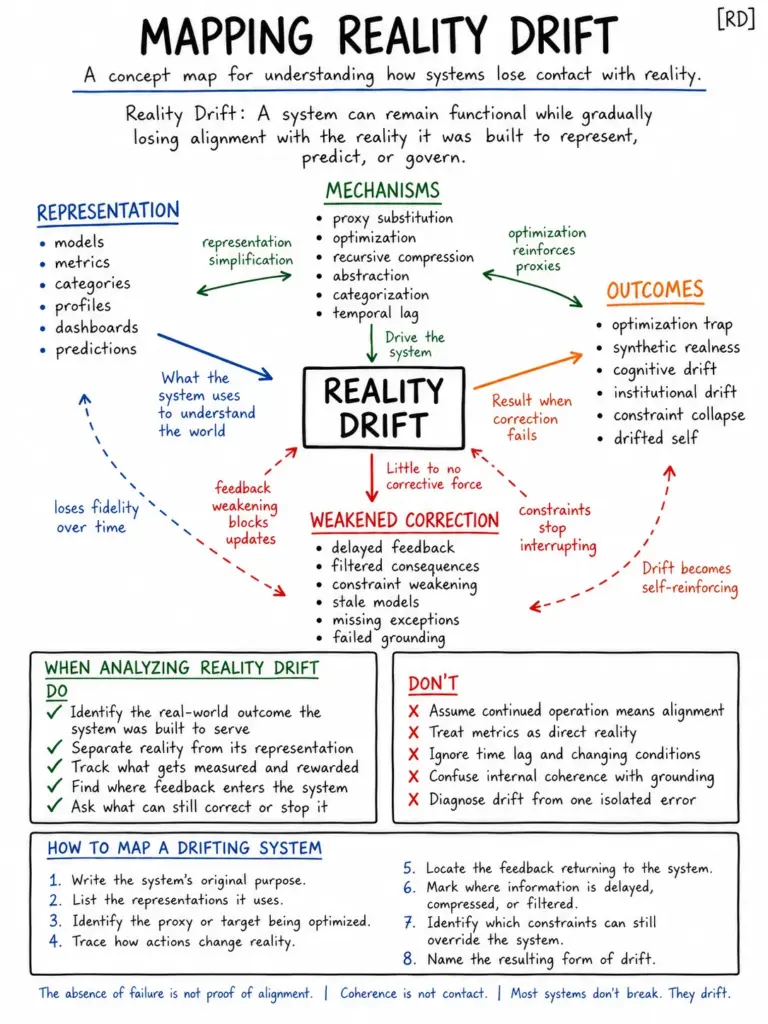
A framework for understanding how modern systems can remain functional while gradually losing alignment with the realities they are meant to represent.
Reality Drift identifies recurring structural patterns that emerge when perception, meaning, and decision-making are shaped by optimization, compression, and layered mediation.
Core Definition

Core Concepts
These concepts describe the primary mechanisms through which drift emerges across systems:
- Reality Drift
- Optimization Trap
- Synthetic Realness
- Filter Fatigue
- Cognitive Drift
- The Age of Drift
- Constraint Collapse
- The Drifted Self
- Semantic Fidelity
- Recursive Compression
How It Shows Up
Applied examples of Reality Drift across digital environments, media, and everyday experience:
- Why Does Everything Online Feel Fake (PDF)
- Why Does Everything Feel Optimized Now (PDF)
- Why Do Conversations Feel Scripted Now (PDF)
- Why Does Modern Life Feel Overwhelming (PDF)
Explore the System
A deeper exploration of the framework across formats:
Research Archive
Underlying models, early papers, and formal expansions of the framework:
Tools and Diagnostics
Practical guides for identifying and navigating drift in real environments:
Note: This archive collects foundational definitions, frameworks, papers, and reference materials related to the Reality Drift framework.
Part of Reality Drift Framework by A. Jacobs