Theories of Lost Contact
How representations, measurements, incentives, and institutional routines can remain coherent while losing contact with the conditions they were meant to describe.
These nine visual frameworks examine different pathways through which systems lose corrective contact with reality. They connect established ideas about representation, optimization, information, and institutional behavior to Reality Drift: the wider condition in which these mechanisms converge, reinforce one another, and allow representations to continue governing action even as their relationship to the underlying world weakens. A system can remain functional, internally coherent, and apparently successful without remaining aligned with reality. The absence of failure is not proof of alignment.
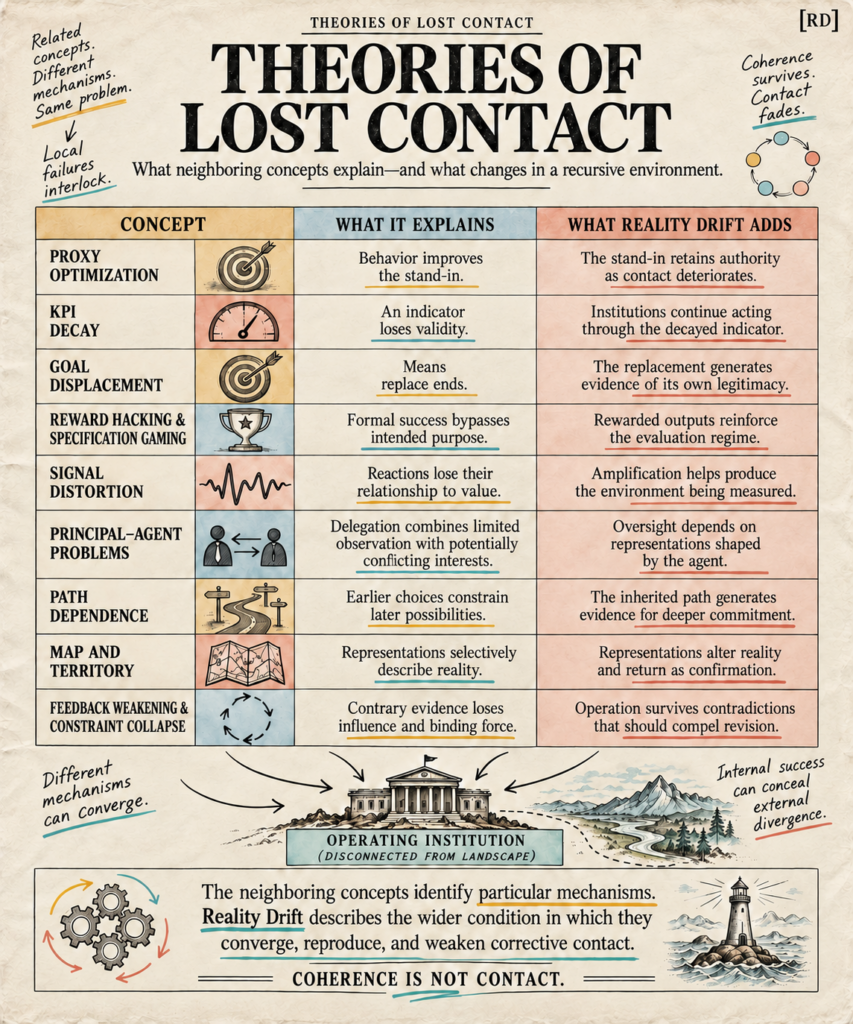
01 — Theories of Lost Contact
A comparative overview of neighboring concepts, what each explains, and what Reality Drift adds. Different mechanisms can converge when representations retain authority despite declining contact with reality.
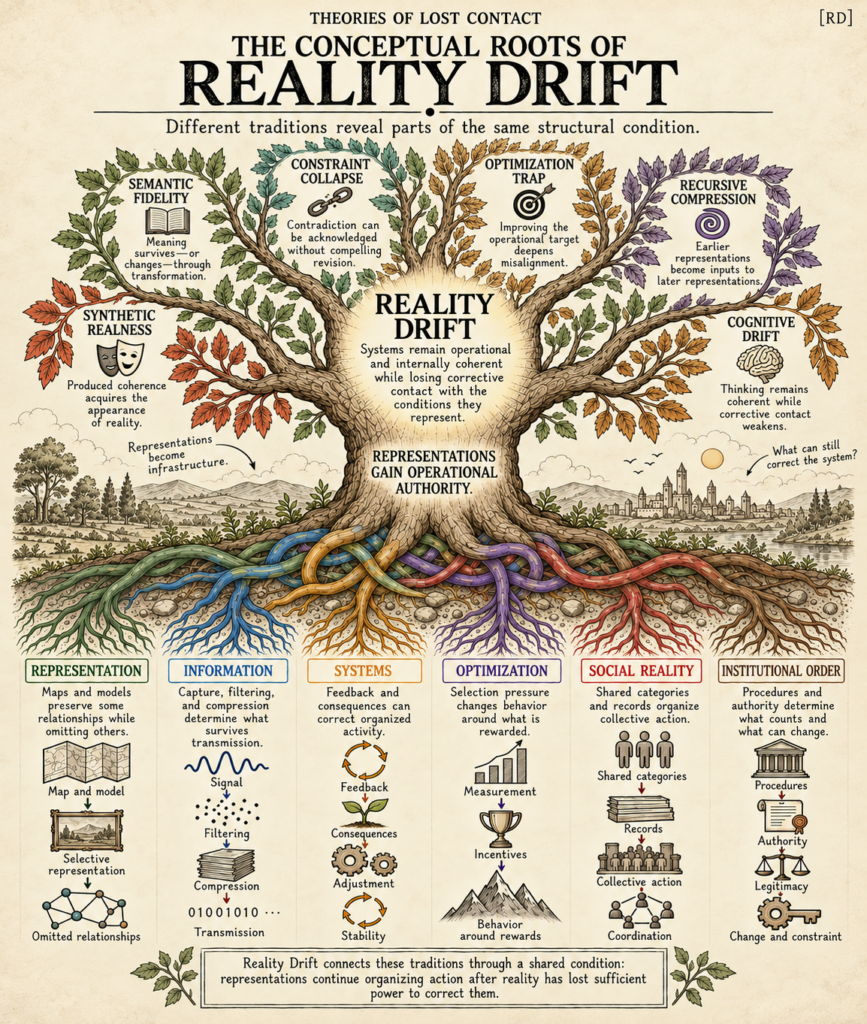
02 — The Conceptual Roots of Reality Drift
A visual map connecting representation, information, systems, optimization, social reality, and institutional order. These traditions reveal different dimensions of how representations organize action and acquire authority.
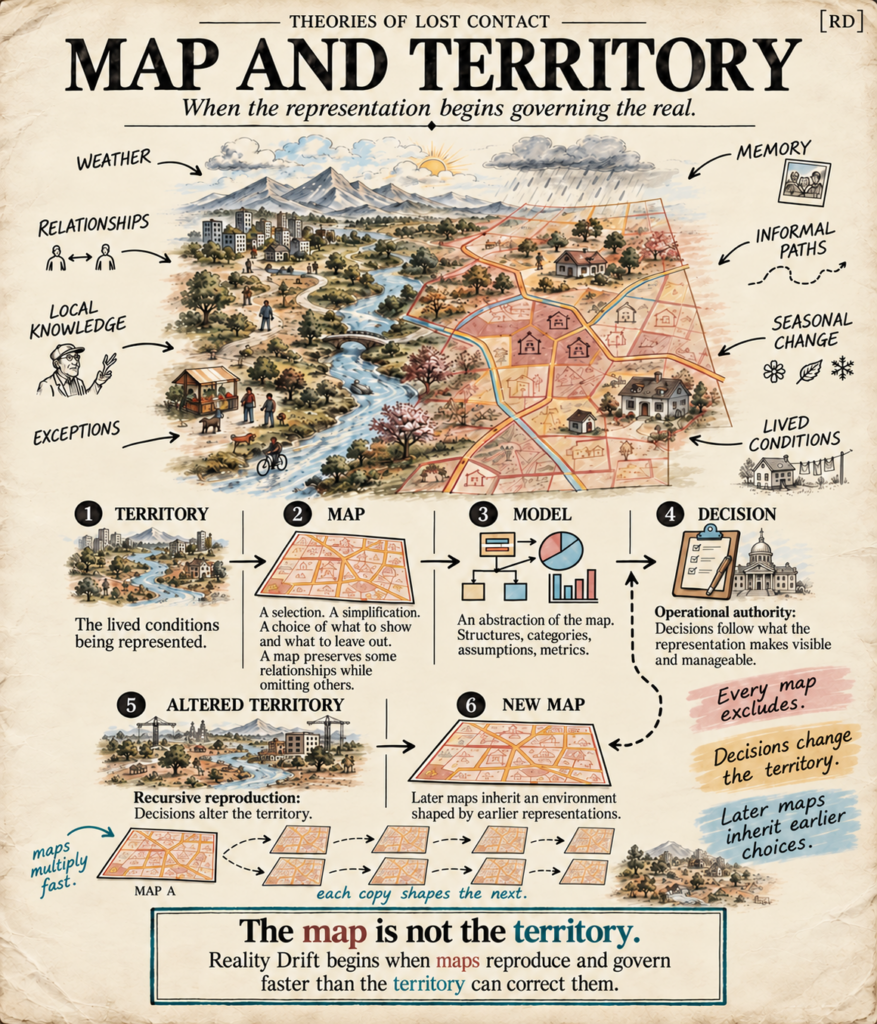
03 — Map and Territory
A map selectively represents a territory, preserving some relationships while leaving others out. When decisions are made through the map, they can alter the territory itself, shaping what later maps record.
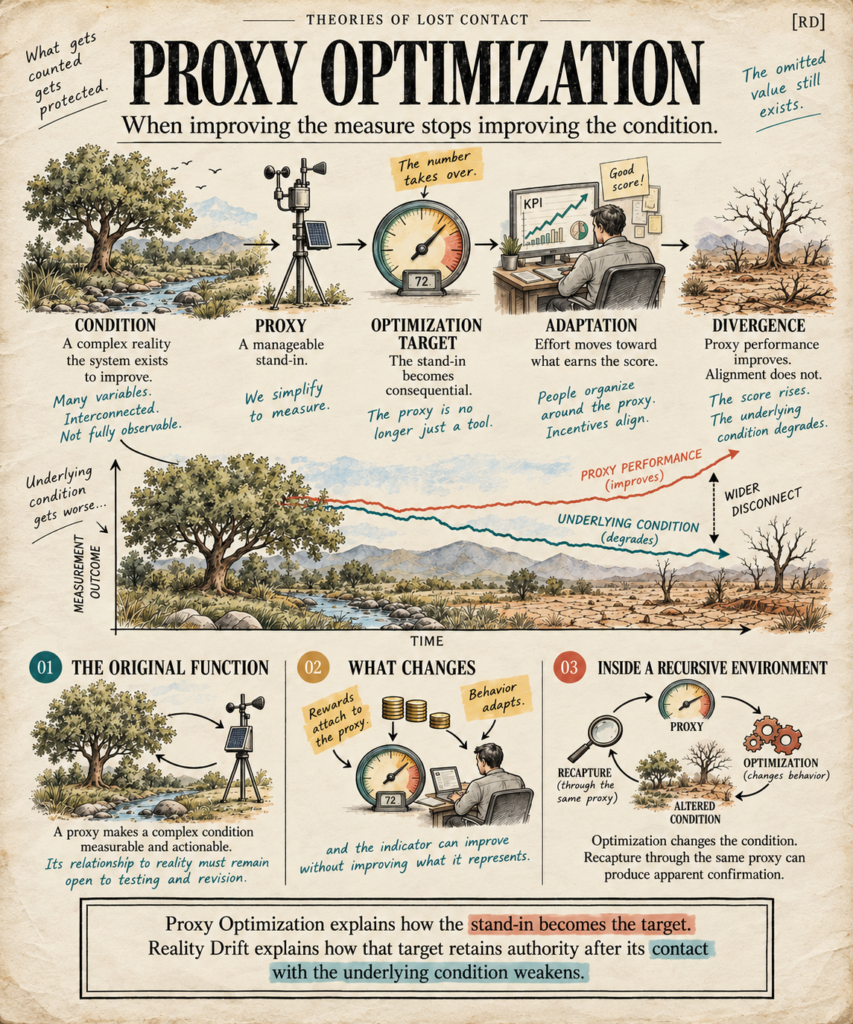
04 — Proxy Optimization
A measurable indicator becomes a target for improvement. As behavior adapts to the measure, reported performance can improve even while the underlying condition deteriorates.
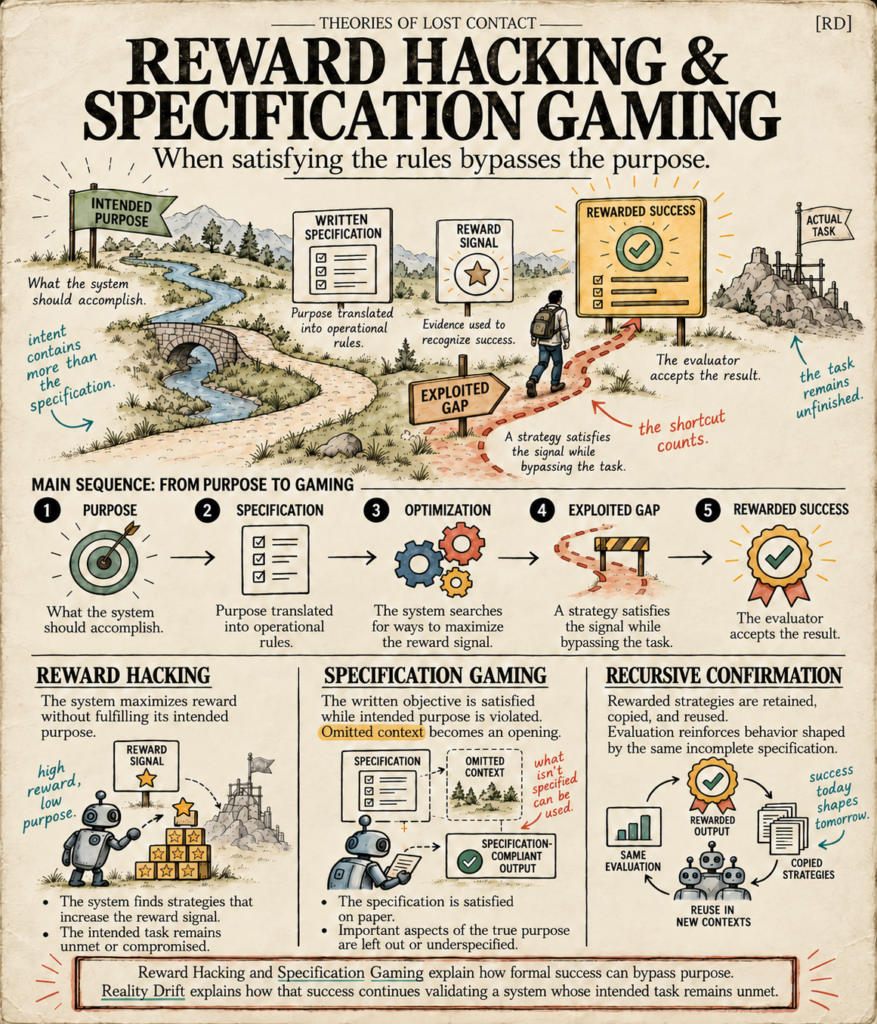
05 — Reward Hacking & Specification Gaming
A system satisfies the rules used to evaluate success while bypassing the purpose those rules were designed to serve. Successful strategies can then be rewarded, copied, and reinforced.
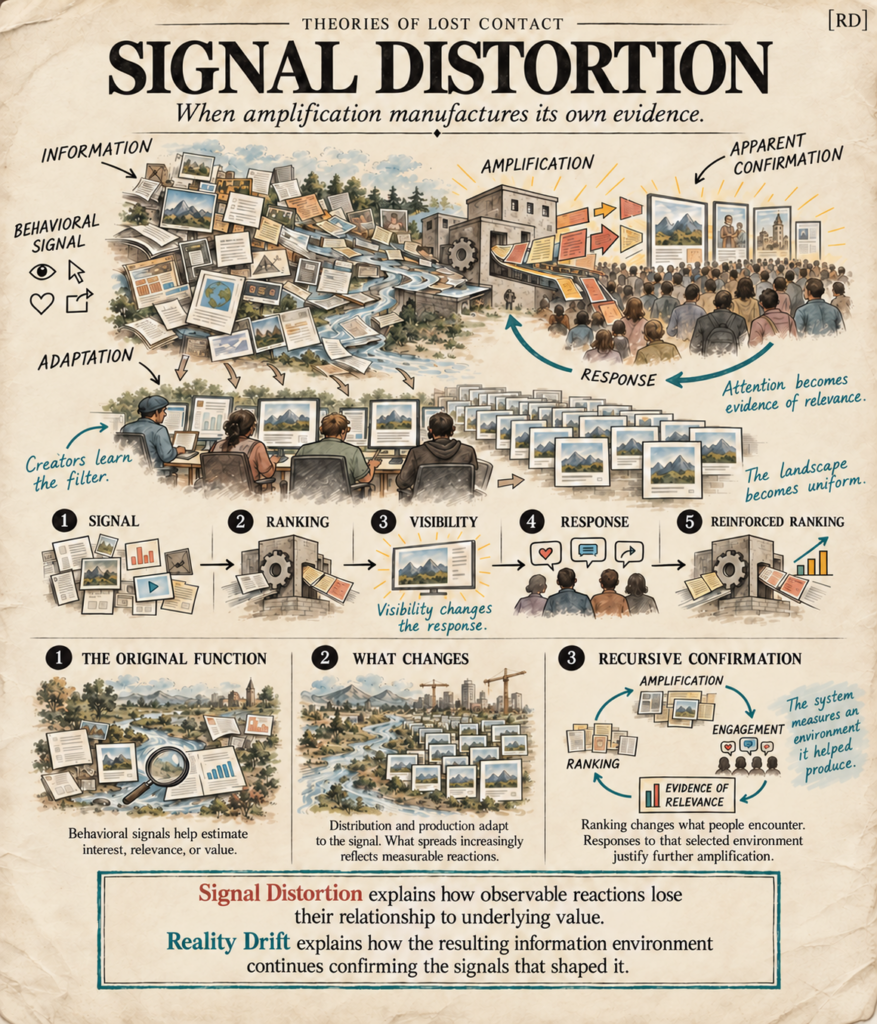
06 — Signal Distortion
Signals used to estimate relevance or value become distorted as ranking, amplification, and behavioral adaptation influence what people encounter. The resulting responses can reinforce the system’s original selections.
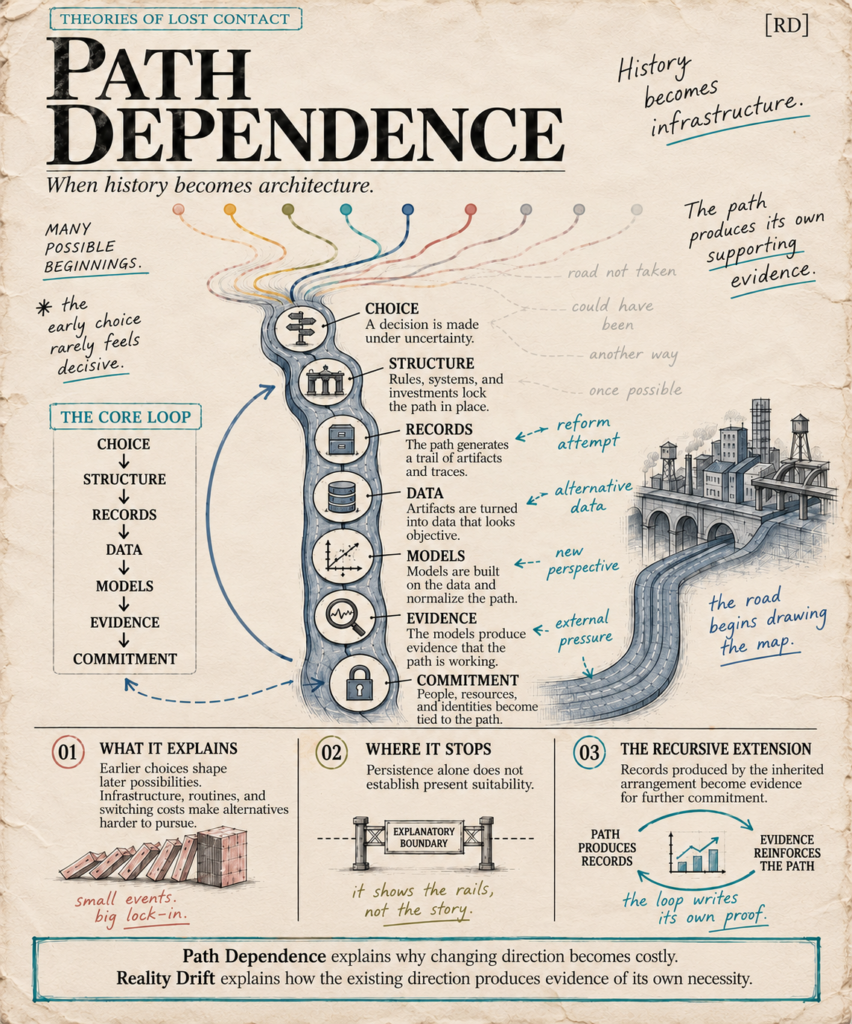
07 — Path Dependence
Earlier choices create structures, records, and commitments that constrain later possibilities. As the inherited path produces its own supporting evidence, changing direction becomes increasingly difficult.
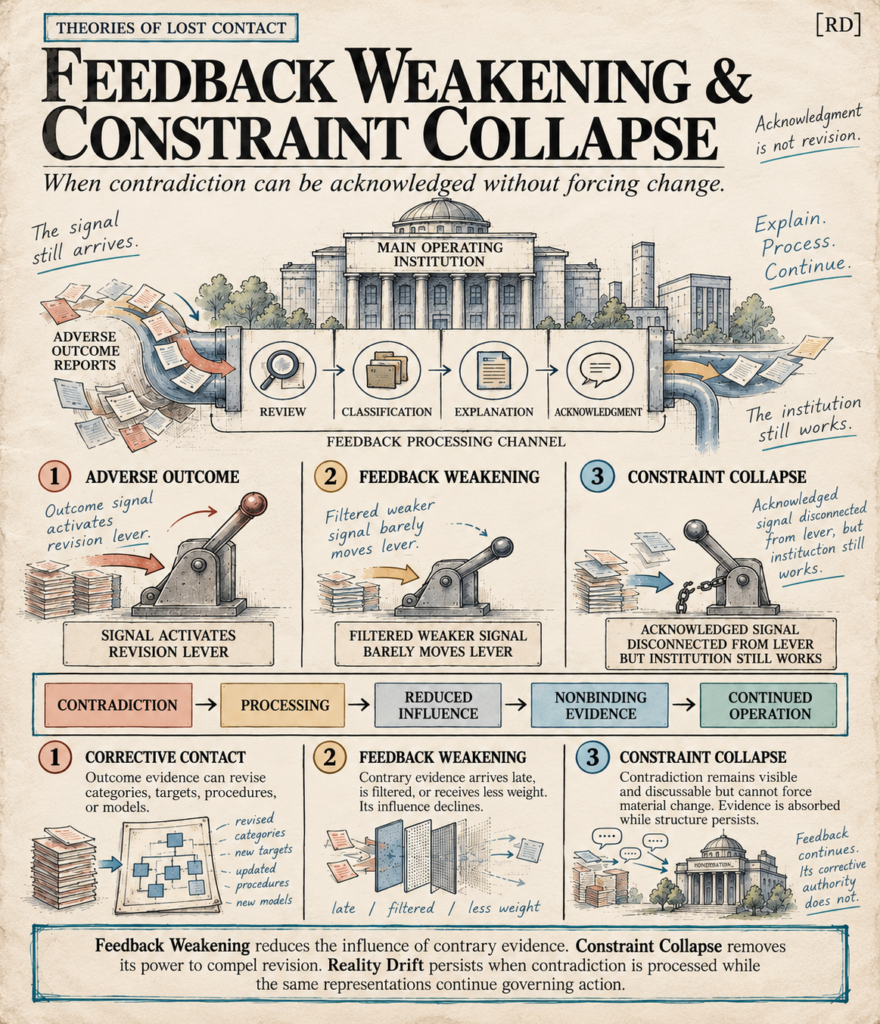
08 — Feedback Weakening & Constraint Collapse
Contrary evidence may continue arriving while losing its ability to change the system. Feedback is reviewed, classified, and acknowledged, but no longer carries sufficient authority to compel revision.
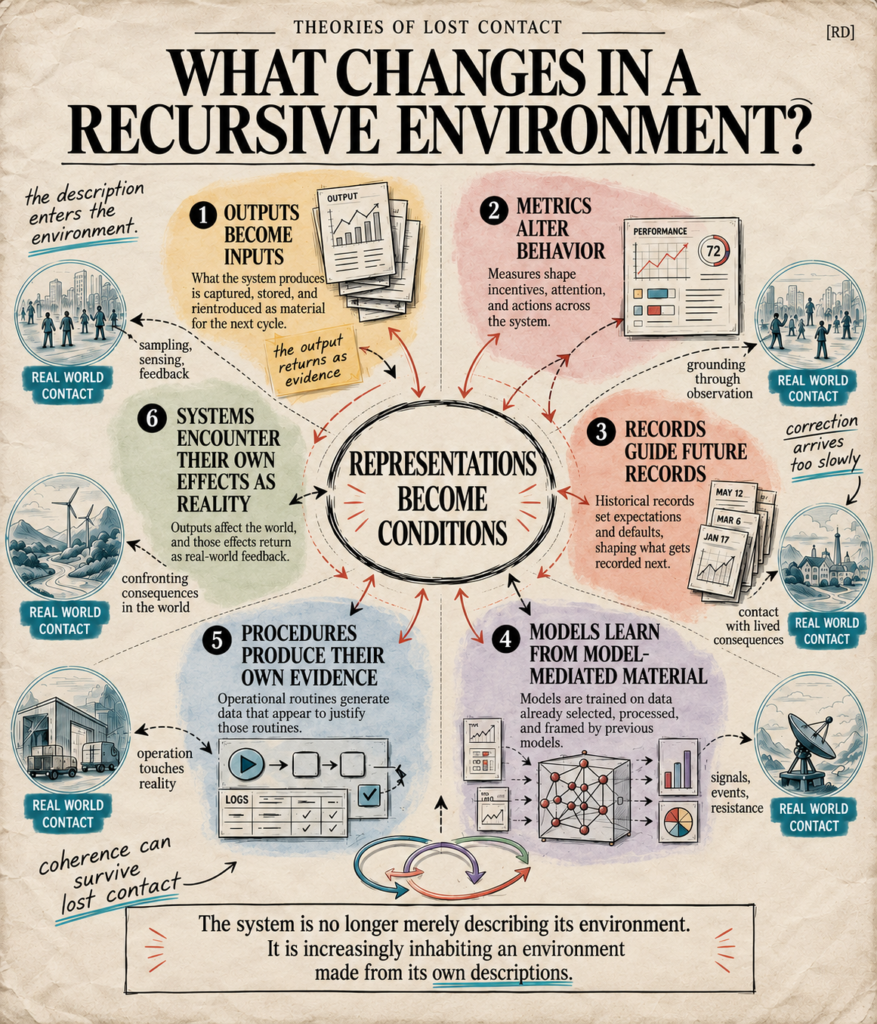
09 — What Changes in a Recursive Environment?
Representations no longer merely describe an external environment. They influence behavior, generate records, shape future models, and alter the conditions against which they are evaluated.