Institutional Drift Artifacts

Checklists, Audits, Compliance Forms, and Internal Signals

Institutions rarely announce their drift. More often, drift appears indirectly through forms, audits, dashboards, internal reviews, and procedural systems designed to maintain alignment.

These artifacts reconstruct that internal language.

Each piece mimics the visual logic of modern organizations. Checklists, compliance modules, vendor assessments, service audits, and operational diagnostics. They represent the procedural layer where institutions attempt to measure, monitor, and correct themselves.

These visuals form a symbolic archive of Institutional Drift. The moment systems remain functional while becoming increasingly detached from their original purpose.


Artifacts

1. Drift / Fidelity Checklist

A general internal audit tool for detecting loss of fidelity between operational systems and real-world outcomes.

Core pattern: Outcome fidelity versus proxy maintenance
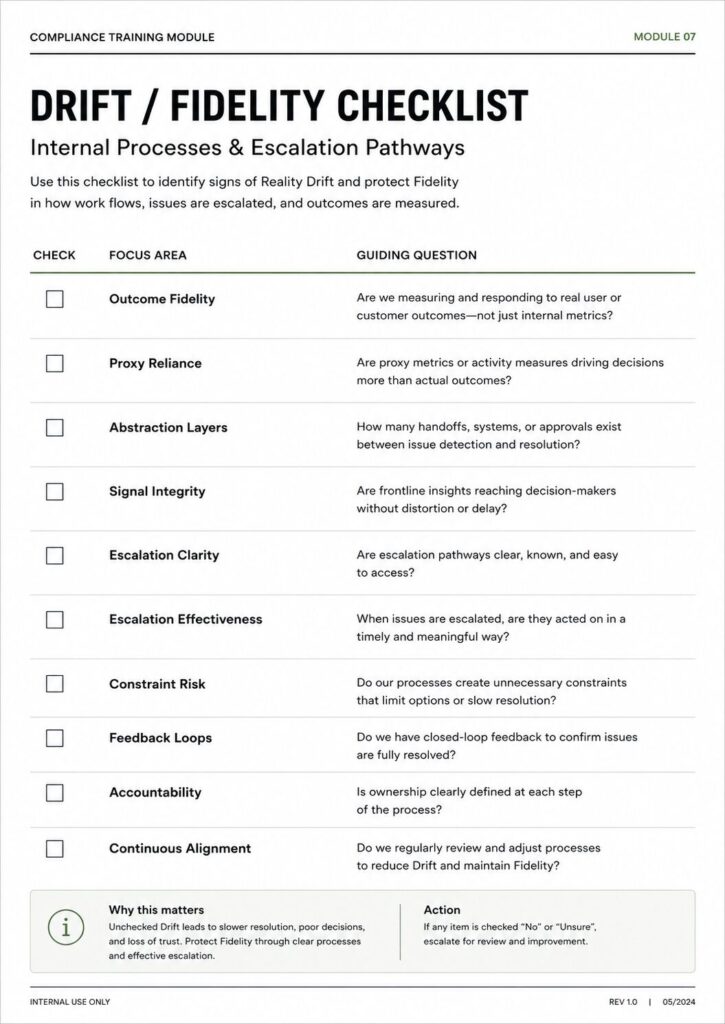
A fictional internal compliance checklist listing organizational signs of drift, including proxy reliance, abstraction layers, feedback loops, and accountability gaps.

2. Filter Fatigue & Synthetic Realness Audit

A design health checklist identifying when optimization begins flattening authenticity, novelty, and meaningful engagement.

Core pattern: Optimization replacing depth
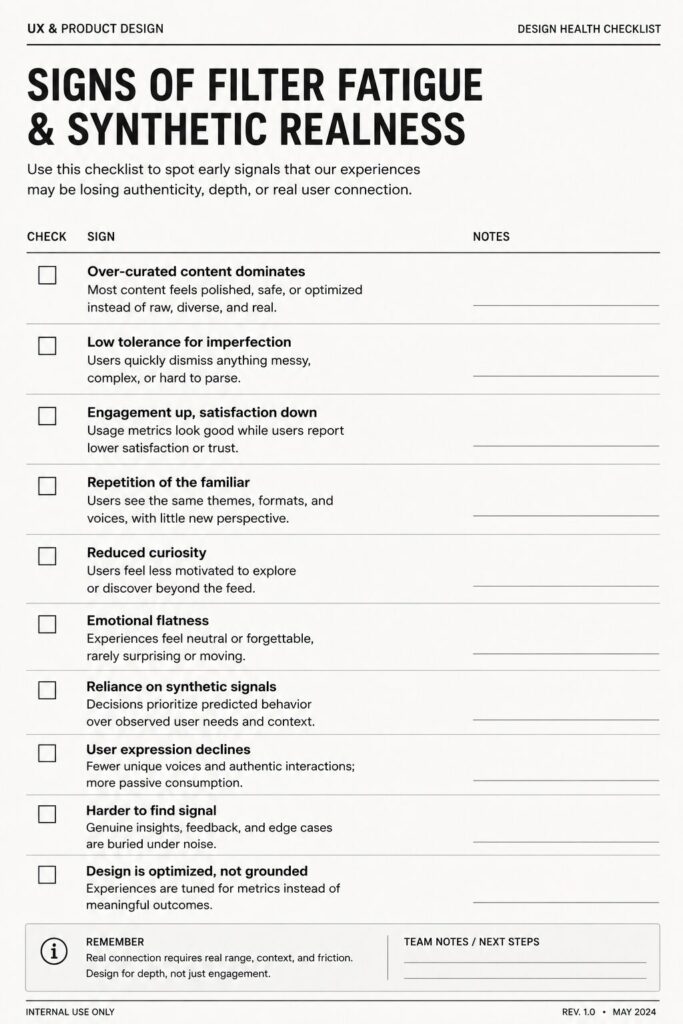
A workplace design audit form identifying signs of over-curated content, repetitive user experiences, and declining authenticity in digital systems.

3. Vendor Drift Risk Evaluation

A procurement assessment for detecting outsourced complexity, hidden abstraction layers, and dependency risks.

Core pattern: Externalized drift through vendors
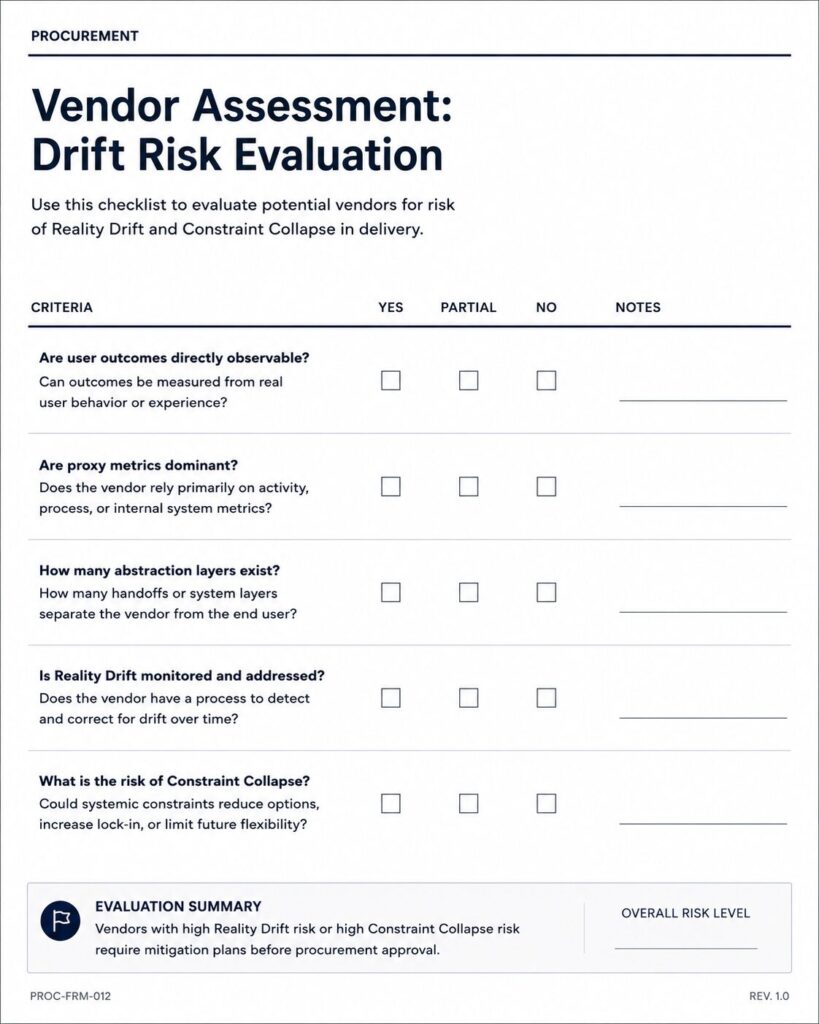
A procurement assessment sheet evaluating vendors for operational drift risk, proxy metrics, abstraction layers, and constraint collapse.

4. Institutional Drift Self-Check

A broad organizational diagnostic for identifying early signs of internal misalignment before failure becomes visible.

Core pattern: Operational continuity masking structural decay
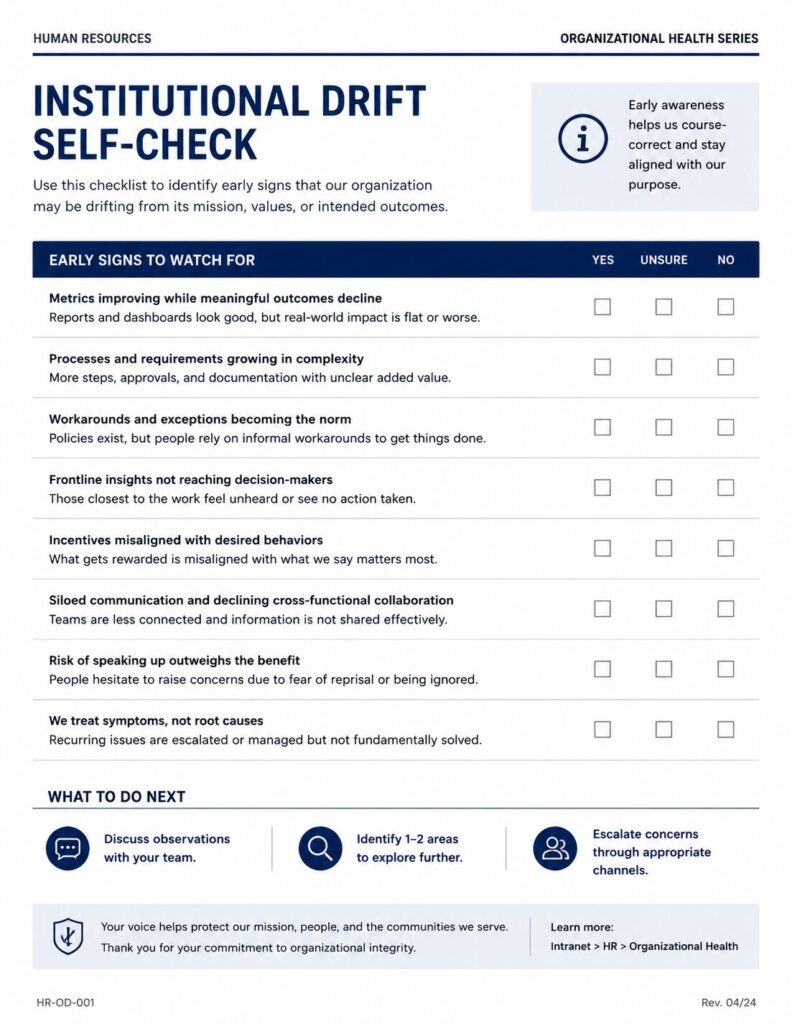
A human resources self-assessment checklist showing early organizational warning signs like rising complexity, misaligned incentives, and siloed communication.

5. Customer Service Reality Drift Audit

A service quality form focused on scripts, repeat contacts, escalation loops, and unresolved root causes.

Core pattern: Procedure replacing problem-solving
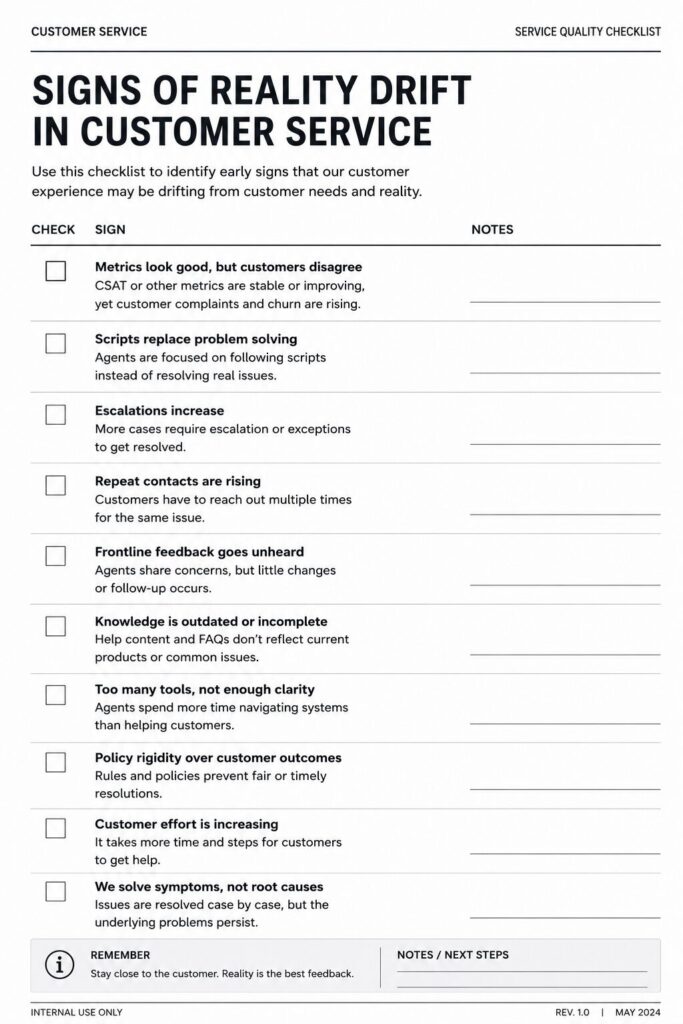
A customer service quality checklist identifying scripted interactions, repeat contacts, escalations, and unresolved systemic issues.

6. Supply Chain Reality Drift Checklist

A systems audit for identifying breakdowns between forecasts, frontline realities, and actual operational performance.

Core pattern: Abstraction outrunning ground truth
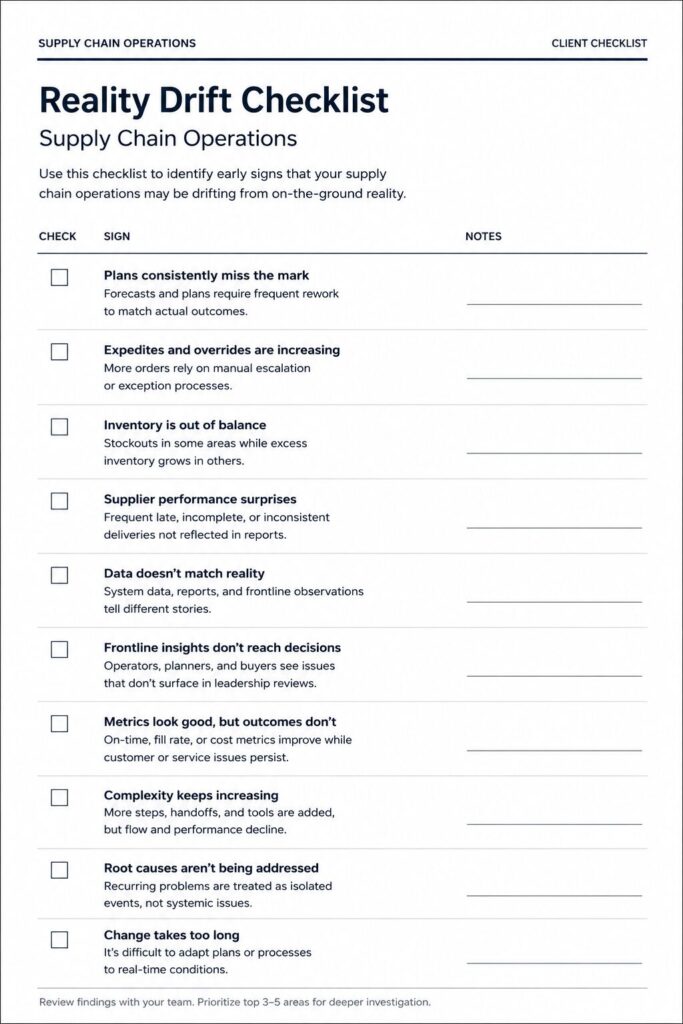
An operations checklist showing supply chain drift through missed forecasts, inventory imbalance, supplier issues, and increasing process complexity.

7. AI Enterprise Fidelity Index

A strategic assessment tool for evaluating whether AI adoption remains aligned with real business outcomes, user needs, and governance integrity.

Core pattern: AI scaling faster than fidelity
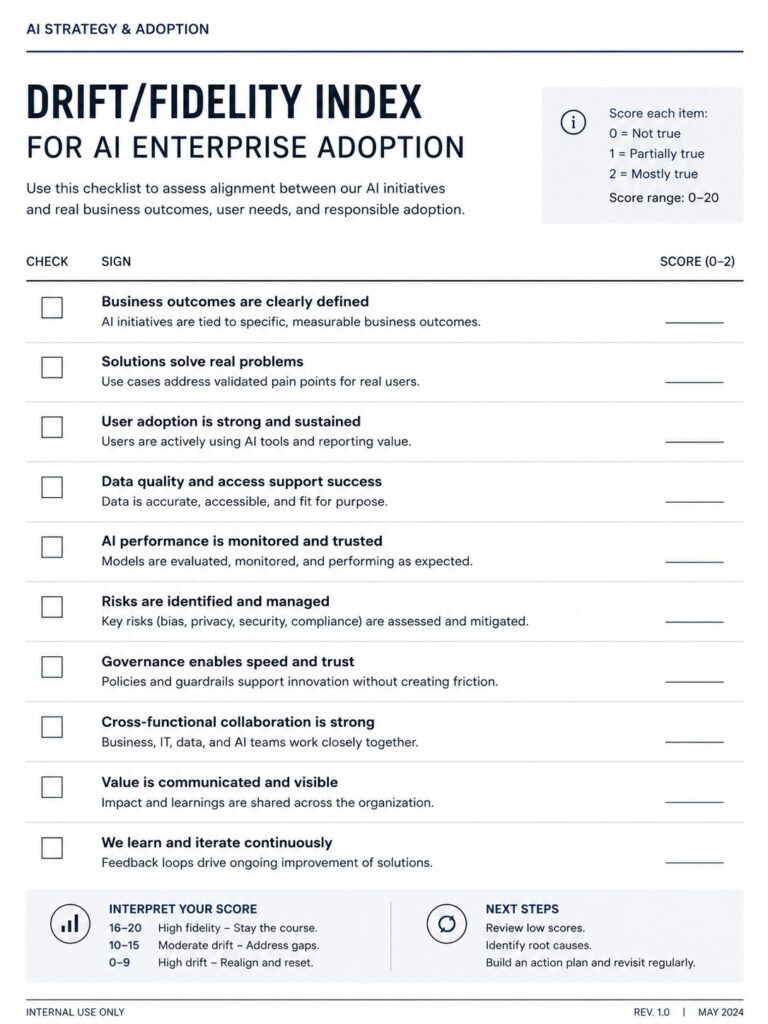
A corporate AI strategy assessment form measuring alignment between AI adoption, business outcomes, governance, and operational trust.

8. Early Signs of Organizational Drift (Poster)

A workplace awareness poster designed to normalize early detection and intervention before institutional misalignment hardens into culture.

Core pattern: Drift becoming ambient
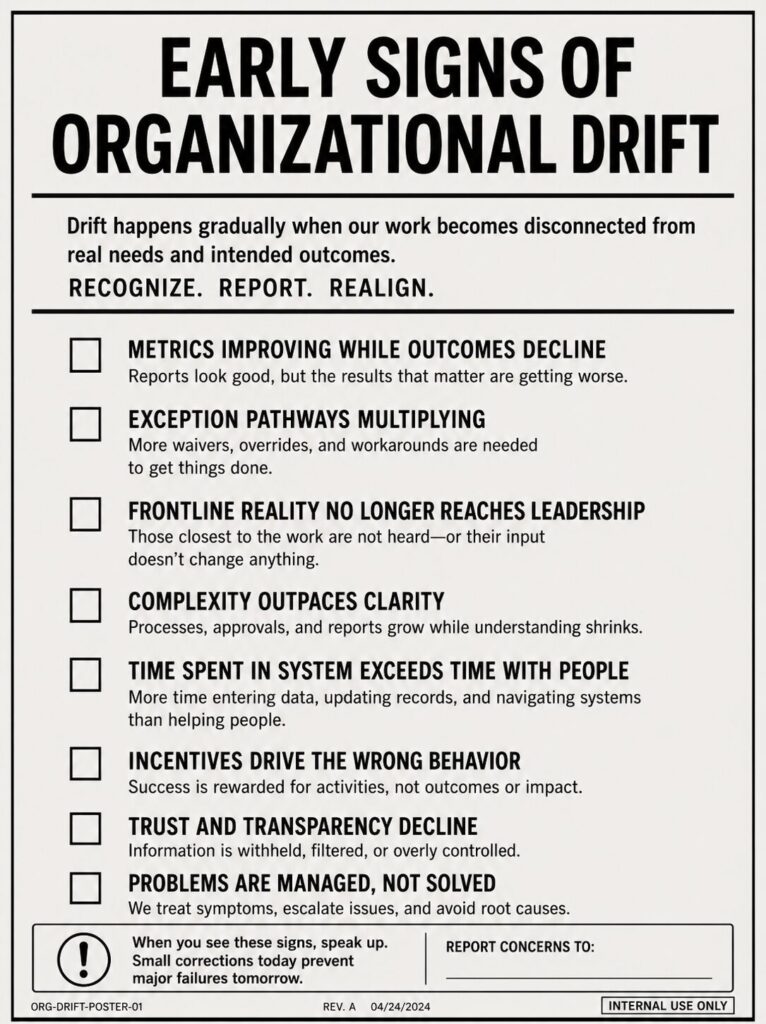
A fictional internal workplace poster listing warning signs of institutional drift, including metric obsession, workaround growth, and declining transparency.

The Structure Beneath the Process

Institutions often build corrective systems faster than they correct the underlying problem. As complexity grows, more layers are added. Audits, reviews, dashboards, policies, and escalation channels. These tools can improve visibility, but they can also become part of the drift itself.

Reality Drift often persists not because institutions lack intelligence, but because their internal representations of reality become more stable than reality itself. These artifacts visualize that process.


Explore The Framework

Start Here:

Related Concepts:


Note: This site functions as a lightweight archive and reference layer for the Reality Drift framework. Primary essays and long-form writing are distributed across external platforms.

Substack • GitHub • DOI

Part of Reality Drift Framework by A. Jacobs

Leave a Reply

Your email address will not be published. Required fields are marked *