

Twelve Architectures of Representation
How different structures make reality, thought, identity, and experience recognizable by determining what becomes visible and what remains outside the frame.
These eight visual frameworks examine how representations organize what we know, remember, believe, measure, and understand. Every representation makes something easier to see and something else easier to miss. Over time, these structures can do more than describe reality. They can influence how reality is interpreted, experienced, and reproduced, particularly when what remains outside the frame can no longer correct the representation.
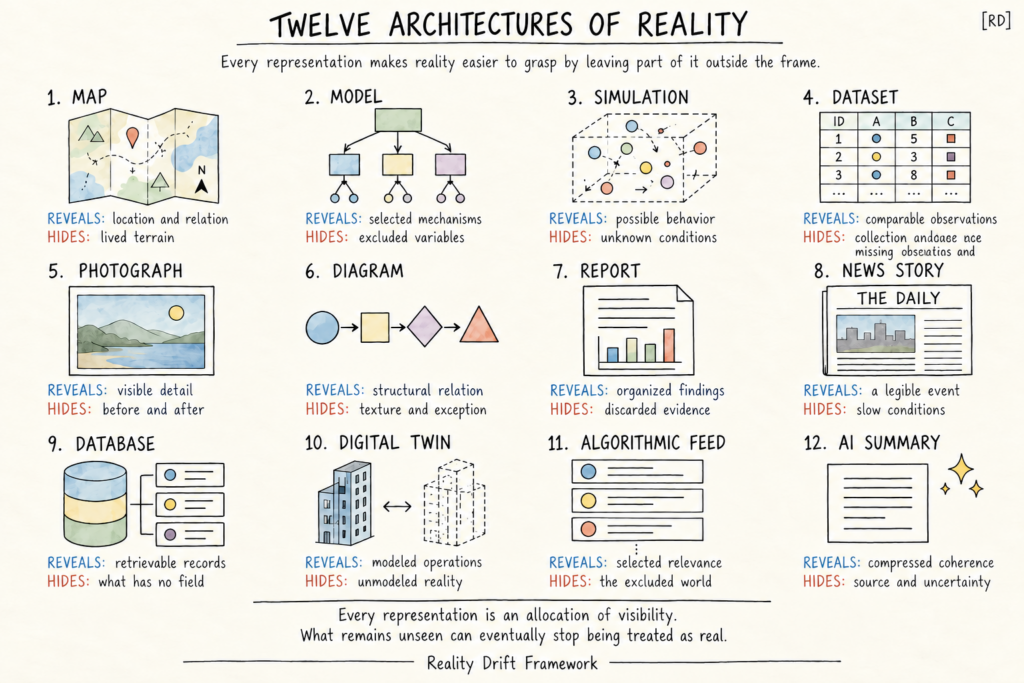
01 — Twelve Architectures of Reality
Maps, models, simulations, datasets, photographs, and AI summaries make complex conditions easier to grasp by selecting what becomes visible. Every representation also leaves something outside its frame.
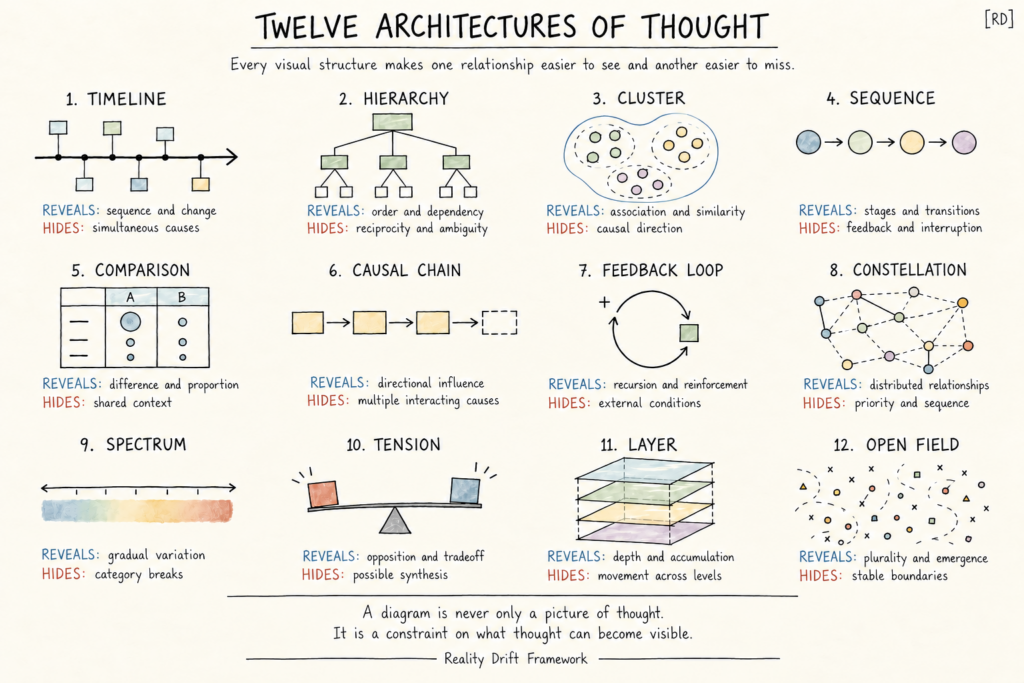
02 — Twelve Architectures of Thought
Timelines, hierarchies, clusters, causal chains, feedback loops, and other visual structures organize relationships between ideas. Each makes certain connections easier to recognize while obscuring others.
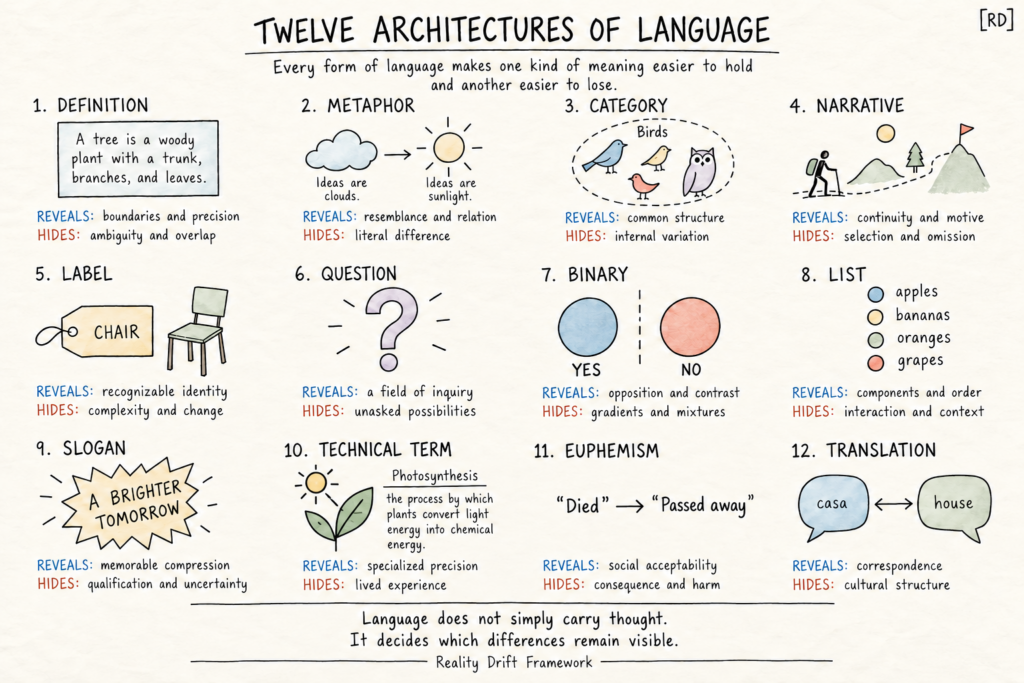
03 — Twelve Architectures of Language
Definitions, metaphors, categories, narratives, labels, and translations shape how meaning is expressed and understood. Language does not simply communicate distinctions. It helps determine which distinctions remain visible.
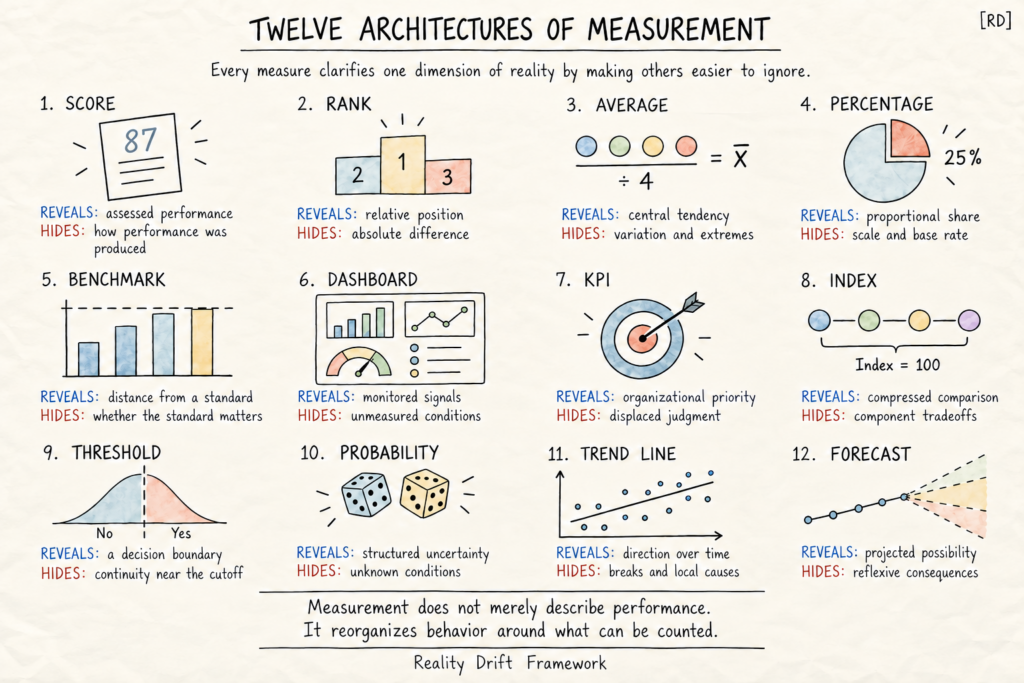
04 — Twelve Architectures of Measurement
Scores, rankings, averages, benchmarks, dashboards, and forecasts turn complex conditions into measurable comparisons. What begins as a description of performance can eventually become a target around which behavior is organized.
05 — Twelve Architectures of Memory
Photographs, diaries, timelines, family stories, archives, and AI summaries preserve selected traces of the past. These structures influence not only what survives but also what can later be recalled, interpreted, and treated as history.

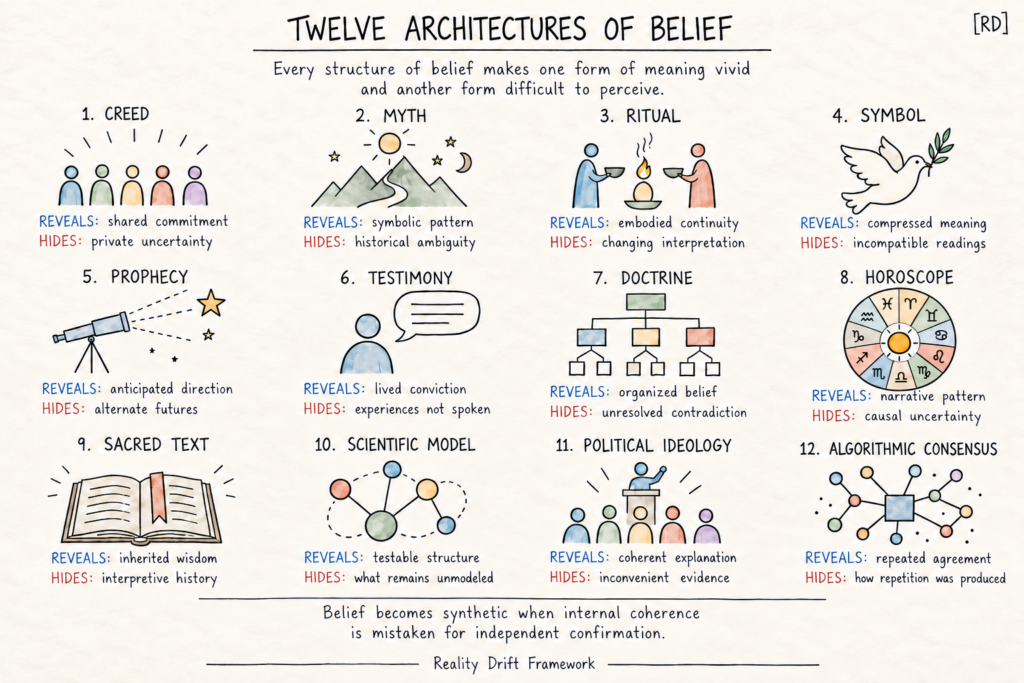
06 — Twelve Architectures of Belief
Creeds, myths, rituals, doctrines, scientific models, ideologies, and algorithmic consensus organize how people interpret the world. Internal coherence can strengthen a belief system even when its connection to independent evidence weakens.
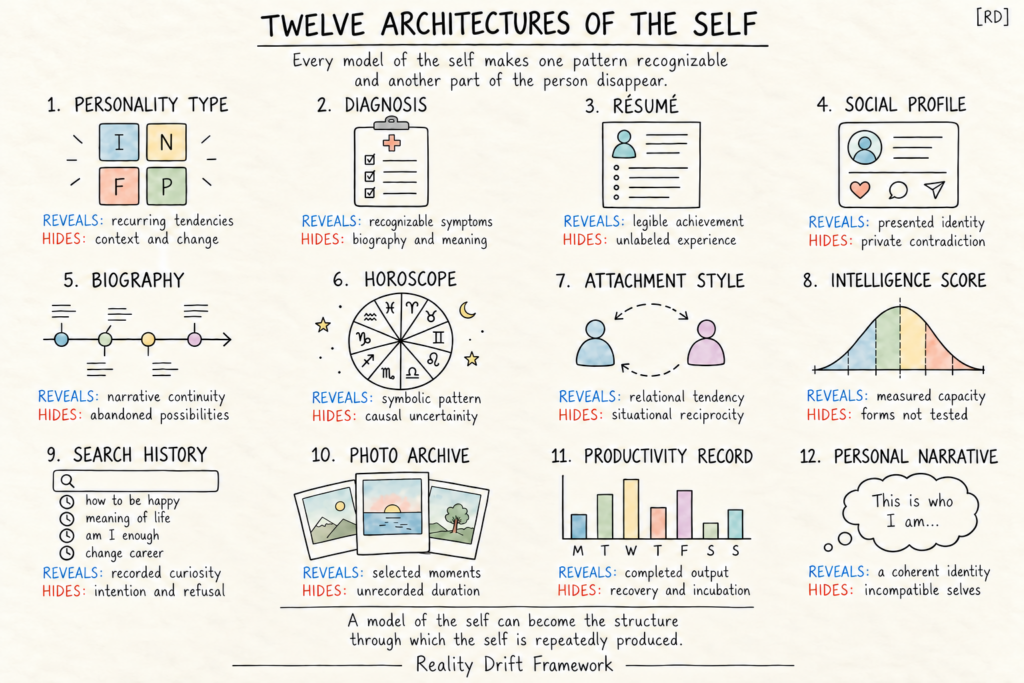
07 — Twelve Architectures of the Self
Personality types, diagnoses, biographies, social profiles, intelligence scores, and personal narratives make aspects of identity recognizable. These descriptions can become expectations that influence how people understand and reproduce themselves.
08 — Twelve Architectures of Relationships
Attachment styles, love languages, compatibility scores, family trees, message histories, and social profiles make relational patterns easier to describe. The language used to explain a relationship can eventually influence how that relationship operates.
